The Importance of Fire Safety Signage
The Importance of Fire Safety Signage
Walk around most commercial premises and you'll see fire safety signs so often that they become invisible. Exit signs above doors. A fire action notice by the alarm call point. An extinguisher with a red sign mounted above it. After a while, people stop noticing them — which is exactly when they become critical.
Fire safety signage isn't decoration. It's a legal requirement, and when something goes wrong, it can be the difference between an orderly evacuation and a chaotic one.
What the Law Says
Two main pieces of legislation govern fire safety signage in the UK:
The Regulatory Reform (Fire Safety) Order 2005 (RRO) is the cornerstone of fire safety law in England and Wales. Under Article 14, the responsible person — typically the employer, building owner or occupier — is legally required to ensure that escape routes and exits are clearly marked and that fire safety signage is provided, visible and maintained. Non-compliance can result in enforcement notices, unlimited fines, or in serious cases, prosecution and imprisonment.
The Health and Safety (Safety Signs and Signals) Regulations 1996 sets out the specific design, colour and format requirements that fire safety signs must meet — including when illuminated or photoluminescent signs are required.
For high-rise residential buildings, the Fire Safety (England) Regulations 2022 — introduced following the Grenfell Tower Inquiry — introduced additional requirements, including wayfinding signage to assist fire and rescue services navigating the building.
The Four Main Categories of Fire Safety Signs
1. Fire Action Notices
These tell people what to do if they discover a fire or hear the alarm. They should display the fire brigade number, which exits to use, where the assembly point is, and any other relevant instructions. They must be displayed at fire alarm call points and at final exit doors.
2. Fire Exit and Escape Route Signs
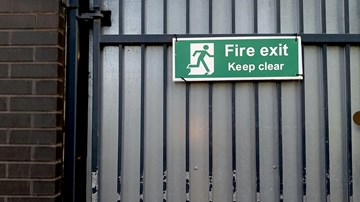
The familiar green running man. These signs direct people to the nearest exit and must mark escape routes clearly, with directional arrows where needed. Premises with straightforward single-exit layouts may have limited requirements, but any building with a complex layout, multiple floors or large occupancy must ensure every exit route is signed throughout.
Fire exit signs must be legible in all conditions. Where a building requires emergency lighting, exit signs will typically also need illumination — either internally lit, externally lit, or photoluminescent.
3. Fire Door Signs
Every fire door must be signed. The standard sign reads "Fire Door — Keep Shut." Doors that are designed to be held open by a magnetic release must carry "Fire Door — Keep Clear" signage. This matters because a fire door propped open or left unlocked defeats its purpose entirely.
4. Fire Equipment Signs
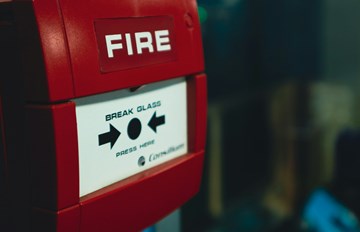
Red signs identify fire extinguishers, hose reels and other firefighting equipment. Every premises with a fire extinguisher must have a corresponding ID sign. Fire alarm call points must also be clearly signed.
Assembly point signs — green, showing a group of people — must be positioned well away from the building and visible to people evacuating.
Why Signage Gets Overlooked — and Why That's a Problem
In busy workplaces, signs get covered by furniture, obscured by stored stock, damaged or simply never replaced when they fade or peel. It's one of the most common issues identified during fire risk assessments.
The problem is that signage failures are invisible during normal operations. Nobody notices the exit sign that's been blocked by a shelving unit until there's smoke in the corridor. At that point, it's too late to fix.
There are a few recurring issues worth being aware of:
Obstructed signs. A sign hidden behind a door, above a high shelf or covered by a notice board is non-compliant and potentially dangerous. Signs must have a clear line of sight from any point along the escape route.
Faded or damaged signs. Signs deteriorate over time, particularly in environments with direct sunlight, humidity or chemical exposure. Photoluminescent signs lose their effectiveness if they haven't been charged by adequate light levels.
Incorrect signs. Using the old British Standard "green running man" design rather than the current ISO 7010 standard, or using signs that don't reflect the actual layout of the building, are both issues that can arise over time — particularly after refurbishments or layout changes.
Missing signs. Any new escape route, fire door or piece of equipment needs appropriate signage. Changes to building layout or use that aren't reflected in the signage create gaps in the fire safety provision.
Signage and the Fire Risk Assessment
Under the RRO, every non-domestic premises must have a current fire risk assessment. Signage is a core element of that assessment. A competent assessor will check that:
- All escape routes are signed throughout their length
- Exit signs are illuminated or photoluminescent where required
- Fire doors are correctly signed
- Equipment is clearly identified
- Assembly points are marked and accessible
- Action notices are in place and up to date
If deficiencies are found, they'll be recorded as action points. Depending on severity, they may be classified as requiring immediate remedial action or as recommendations for improvement. Either way, they need to be addressed.
A Simple Point
Fire safety signage is one of the lowest-cost, highest-impact elements of fire safety provision. A set of compliant signs for a small commercial premises costs relatively little. The consequences of getting it wrong — in terms of legal liability, enforcement action, or harm to the people on your premises — are far greater.
If you haven't reviewed your signage recently, or if you're not certain your current provision meets the requirements for your premises, it's worth getting it checked as part of a professional fire risk assessment.
Whale Fire carries out fire risk assessments across a wide range of commercial, industrial and residential premises. If you'd like to discuss your fire safety requirements, get in touch Contact Us - Whale Fire
The Hidden Fire Risks That Come With Summer
The Hidden Fire Risks That Come With Summer
Summer brings longer days, warmer weather, and — if you're not paying attention — a significant increase in fire risk. Whether you manage a commercial premises, a block of flats, or a business with outdoor space, the change in season brings a fresh set of hazards that are easy to overlook.
Here's what you need to be aware of.
1. Barbecues and Outdoor Cooking
It's the most obvious one, but it causes serious fires every year. Disposable barbecues placed directly on dry grass, portable gas units left unattended, and embers that haven't been fully extinguished before disposal — all of these are genuine ignition risks.
For businesses with outdoor areas — pub gardens, hospitality venues, care home grounds — this needs to be part of your fire risk assessment. Staff should know the procedures, and designated barbecue areas should be clearly defined and managed.
2. Increased Arson Risk
Statistically, arson incidents rise in the summer months. Longer evenings, more people out and about, and dry vegetation around the perimeter of buildings all contribute.
Review your external security arrangements. Bins and recycling should never be stored directly against a building — they are one of the most common arson targets. Good external lighting and clear sightlines around your premises reduce opportunity.
3. Dry Vegetation and Landscaping
A dry summer turns grass verges, hedgerows, and landscaped areas into tinder. If your premises has any significant amount of green space, consider how close it sits to the building and whether a fire in that vegetation could spread.
This is particularly relevant for rural businesses, schools, care homes, and industrial sites on the edges of towns.
4. Increased Solar Gain and Overheating
As temperatures rise, so does the risk of electrical equipment overheating. Server rooms, plant rooms, and areas housing electrical panels all need adequate ventilation. Air conditioning units running at full capacity for extended periods can develop faults.
It's worth doing a walk-round of your electrical and mechanical plant during a hot spell, not just as a tick-box exercise but with fresh eyes.
5. Windows Left Open and Fire Compartmentation
People leave windows and doors open in hot weather — completely understandably. But fire doors propped open to let air circulate destroy the compartmentation your building depends on. A fire that might have been contained to one room can spread rapidly through a building when fire doors are held open.
If overheating is a genuine problem in your building, address it properly — through ventilation, cooling, or management controls — rather than accepting propped fire doors as the default.
6. Construction and Maintenance Work
Summer is peak season for building works, refurbishment, and maintenance. Hot works — cutting, grinding, welding — are a leading cause of fires in commercial premises. Contractors don't always understand your building the way you do.
Make sure any hot works permit system is being followed, that contractors are briefed on your fire procedures, and that adequate fire watch arrangements are in place after work finishes each day.
7. Increased Footfall and Events
If your premises hosts summer events — outdoor markets, fetes, open days — the temporary change in how your building is used needs to be reflected in your fire risk arrangements. Escape routes may be altered, additional people unfamiliar with the building will be present, and additional cooking or electrical equipment may be brought on site.
A temporary or event-specific fire risk review is good practice before any significant change in use.
Don't Wait for an Incident
Many businesses treat fire risk assessments as an annual paperwork exercise. But your fire risk changes with the seasons, with the weather, and with how your building is being used. Summer is a good prompt to revisit your assessment — or to commission one if it's overdue.
Whale Fire provides professional fire risk assessments for commercial premises, landlords, and businesses across the UK. Get in touch to find out how we can help you stay compliant and keep your people safe. Contact Us - Whale Fire
Fire Risk Assessments in London: What You Need to Know
If you own, manage, or are responsible for a building in London — whether it's a block of flats in Hackney, a retail unit on Oxford Street, or an office in Canary Wharf — a fire risk assessment is not optional. It is a legal requirement, and in a city as densely built and heavily scrutinised as London, getting it right has never been more important.
This guide explains what a fire risk assessment in London involves, who needs one, what the law says, and why it matters far beyond simply ticking a compliance box.
What Is a Fire Risk Assessment?
A fire risk assessment is a structured, documented evaluation of a premises that identifies potential fire hazards, determines who may be at risk, and sets out the measures needed to reduce or eliminate that risk. It is not simply filling in a checklist — it is a thorough, site-specific process that forms the foundation of your entire fire safety strategy.
A proper fire risk assessment in London should cover:
- Sources of ignition — faulty wiring, heating equipment, lit candles, cooking areas
- Combustible materials — furnishings, paper, chemicals, or cladding
- People at risk — staff, tenants, visitors, and anyone with specific vulnerabilities such as mobility difficulties
- Existing fire safety measures — alarms, emergency lighting, fire doors, extinguishers, and escape routes
- Actions required — any improvements or remedial work needed to bring the building up to a safe standard
The Legal Requirement for Fire Risk Assessments in London
The primary legislation governing fire risk assessments in England and Wales is the Regulatory Reform (Fire Safety) Order 2005 (the Fire Safety Order). This single piece of legislation replaced over 70 previous fire safety laws and placed responsibility firmly on the "Responsible Person" — typically the employer, building owner, landlord, or managing agent.
Under the Fire Safety Order, the Responsible Person must:
- Carry out a suitable and sufficient fire risk assessment of the premises
- Record the findings in writing — since October 2023, under Section 156 of the Building Safety Act 2022, this is now a requirement for all premises, regardless of the number of employees
- Act on the findings and ensure appropriate fire safety measures are in place
- Review the assessment regularly and whenever significant changes are made to the building or its use
The Building Safety Act 2022 also clarified that the Fire Safety Order applies to the structure, external walls, and individual flat entrance doors in multi-occupied residential buildings — an important change for London landlords and freeholders managing blocks of flats.
Failure to comply is not a minor matter. The London Fire Brigade (LFB) has the authority to inspect your property, issue enforcement notices, and in serious cases, serve prohibition notices that effectively shut a building down until unsafe conditions are addressed. In the most serious cases, responsible persons have faced significant fines and even criminal prosecution.
Why London Is Different
The legal framework for fire risk assessments is the same across England and Wales, but London has some of the most active fire safety enforcement in the country. The London Fire Brigade carries out regular inspections of businesses, residential blocks, and managed properties, with a strong focus on the quality and currency of documentation.
London's specific characteristics also create particular challenges:
- Building density — properties in London are often closer together, older, and more complex in layout than in other parts of the UK, increasing the potential consequences of a fire
- High-rise and mixed-use buildings — London has a high concentration of tall buildings and premises that combine residential and commercial use, both of which carry additional fire safety obligations
- HMOs and shared housing — London has one of the highest concentrations of Houses in Multiple Occupation (HMOs) in the country, all of which require fire risk assessments of shared areas
- Heritage and listed buildings — many London properties are listed or within conservation areas, presenting specific fire safety challenges that require assessors with specialist knowledge
- Post-Grenfell scrutiny — since the Grenfell Tower fire in 2017, fire safety in residential high-rise buildings has been subject to intense regulatory and public scrutiny, and London landlords and freeholders are expected to demonstrate robust compliance
Who Needs a Fire Risk Assessment in London?
A fire risk assessment in London is required for virtually any non-domestic premises and the common parts of residential buildings. This includes:
- Offices and commercial premises — from sole trader studios to large corporate headquarters
- Retail units and shops — including market stalls and pop-up spaces in permanent venues
- Restaurants, cafés, and hospitality venues
- Warehouses and industrial buildings
- Schools, colleges, and educational facilities
- Care homes and healthcare premises
- Hotels, B&Bs, and short-term lets operating as a business
- Blocks of flats and apartment buildings — covering common areas, lobbies, stairwells, and corridors
- HMOs (Houses in Multiple Occupation) — including the shared areas of properties rented to multiple tenants
- Mixed-use developments combining residential and commercial space
- Museums, galleries, and heritage buildings
Individual private dwellings (single-family homes and individual self-contained flats occupied by the owner or a single household) are generally exempt, but as soon as a property has shared areas or is managed for multiple tenants, the Fire Safety Order applies.
How Often Should a Fire Risk Assessment Be Reviewed?
The law does not specify a fixed interval, but it does require that assessments are reviewed regularly and whenever there is reason to believe it may no longer be valid. In practice, this means:
- Annually as a minimum for most commercial and residential premises
- Every 6–12 months for higher-risk properties including HMOs, care homes, and buildings with known deficiencies
- Immediately following significant changes such as refurbishment, change of use, changes to the layout or occupancy of the building, or any fire incident on the premises
- When triggered by external changes — for example, new guidance from the London Fire Brigade or changes in legislation
The Fire Safety Order also specifies that risk assessments should be reviewed if any material change is planned within an occupied building, including refurbishment or redecoration works affecting common parts.
The Five Steps of a Fire Risk Assessment
The London Fire Brigade and the Home Office both describe the fire risk assessment process in five key steps:
- Identify fire hazards — sources of ignition, fuel, and oxygen
- Identify people at risk — employees, tenants, visitors, and those with particular vulnerabilities
- Evaluate, remove, or reduce the risks — assess what's already in place and what needs improving
- Record findings, prepare an emergency plan, and provide training — written documentation is now mandatory for all premises
- Review and update regularly — keep the assessment current as circumstances change
For more complex properties, the methodology set out in PAS 79-1:2020 (for non-domestic premises) and BS 9792:2025 (for residential buildings including HMOs, blocks of flats, and student accommodation) provides a more detailed framework that professional assessors in London are expected to follow.
Do You Need a Professional Fire Risk Assessor in London?
The Fire Safety Order requires that assessments are carried out by a competent person — someone with sufficient training, experience, and knowledge to carry out the task properly. This does not always mean hiring an outside specialist, but for most London premises it is strongly advisable.
You may be able to carry out your own assessment if you have a small, straightforward premises with low fire risk and relevant knowledge and experience. However, for most commercial premises, residential blocks, HMOs, and any building with multiple occupants, a qualified professional assessor is the right choice.
When appointing a fire risk assessor in London, look for:
- Membership of a recognised body such as the Institution of Fire Engineers (IFE), the Institute of Fire Safety Managers (IFSM), or the British Fire Consortium
- Experience specifically with your property type
- Familiarity with London Fire Brigade expectations and enforcement standards
- Clear, written reports with actionable recommendations
The Consequences of Getting It Wrong
The consequences of an inadequate or missing fire risk assessment in London can be severe:
- Enforcement notices from the London Fire Brigade requiring remedial action within a set timeframe
- Prohibition notices shutting your premises until deficiencies are resolved
- Significant fines — there is no upper limit for the most serious offences
- Criminal prosecution — responsible persons have been imprisoned for failing to meet their fire safety duties
- Insurance complications — many insurers require a valid, up-to-date fire risk assessment as a condition of cover; without one, a claim following a fire could be rejected
- Civil liability — in the event of injury or death, inadequate fire safety measures can result in civil claims against the responsible person
Most importantly, a fire that could have been prevented can cost lives. In a densely occupied city like London, that risk is not abstract.
Beyond Compliance: The Business Case for Fire Risk Assessments in London
A professional fire risk assessment is not just about avoiding enforcement action. It delivers real practical benefits:
- Peace of mind — knowing your building is safe and compliant
- Insurance protection — demonstrating due diligence in the event of an incident
- Tenant confidence — particularly important for London landlords in a competitive rental market
- Early identification of problems — catching issues before they become emergencies saves money and avoids disruption
- Operational continuity — businesses that suffer serious fires rarely fully recover; prevention is always cheaper than the alternative
The London Fire Brigade itself notes that effective fire prevention starts with properly understanding the risks — and that it is good business sense as well as a legal requirement.
Key Contacts and Resources
- London Fire Brigade — london-fire.gov.uk — guidance for businesses and landlords, plus information on enforcement
- GOV.UK Fire Safety — government guidance on the Fire Safety Order, the Building Safety Act, and fire risk assessment requirements
- UKHSA / HSE — health and safety guidance relevant to workplace fire safety
- Institution of Fire Engineers (IFE) — directory of qualified fire risk assessors
Summary
A fire risk assessment in London is a legal requirement for virtually every non-domestic premises and the common parts of residential buildings. It is enforced actively by the London Fire Brigade, and the consequences of non-compliance range from enforcement notices through to criminal prosecution. Beyond the legal obligation, a proper fire risk assessment protects lives, protects your property, and protects your business.
If you are a London landlord, business owner, or property manager and you do not have a current, written fire risk assessment in place — now is the time to arrange one.
For more fire safety guidance and resources, explore the rest of our website or contact us here with your enquiry Contact Us - Whale Fire
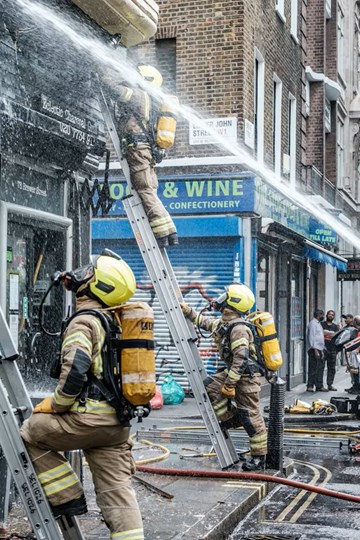
The dangers and consequences of arson
What Is Arson?
Arson is the criminal act of deliberately setting fire to property, land, or structures. From abandoned buildings to homes, vehicles, and woodland, arson is not a victimless crime — it is one of the most destructive and dangerous offences a person can commit. Every year, arson attacks cause deaths, injuries, widespread trauma, and billions of pounds in damage across the UK and worldwide.
Understanding the true cost of arson is an essential part of fire safety awareness. This article explores the immediate dangers arson poses, its long-term consequences for victims and communities, and the serious legal penalties those convicted face.
The Immediate Physical Dangers
Fire is one of the most unpredictable and rapidly escalating forces in nature. When a fire is set deliberately, its behaviour cannot be controlled — not even by the person who started it.
Loss of Life
The most devastating consequence of arson is death. Fires spread faster than most people expect. Within minutes, a room can reach temperatures exceeding 600°C, and a building can become engulfed in flames before occupants have any chance to escape. Firefighters who respond to arson attacks are also placed in extreme danger, sometimes without any knowledge that the fire was set deliberately or that accelerants may have been used.
Severe Injuries
Even those who survive arson attacks can suffer life-altering injuries:
- Burns — ranging from superficial to full-thickness burns requiring skin grafts and years of treatment
- Smoke inhalation — the leading cause of fire deaths, toxic smoke can cause permanent lung damage within seconds
- Carbon monoxide poisoning — a silent killer that can incapacitate before a person is even aware of the fire
- Psychological trauma — survivors of arson often experience PTSD, anxiety, depression, and sleep disorders for years afterwards
Environmental Damage
Deliberately set wildfires and vegetation fires destroy ecosystems, kill wildlife, and release harmful pollutants into the atmosphere. Grassland and forest fires can spread across vast areas within hours, threatening rural communities, farms, and irreplaceable natural habitats.
The Impact on Victims and Communities
Homes and Businesses Destroyed
Losing a home to arson is a catastrophic experience. Beyond the financial loss, families are left without their belongings, their sense of security, and often their memories. Businesses destroyed by arson may never reopen, leading to job losses and long-term economic damage for entire communities.
Displacement and Homelessness
Arson attacks on residential properties can leave multiple families homeless overnight. While insurance may eventually cover some losses, the process can take months or years — leaving victims in temporary accommodation and facing enormous stress.
Community Fear and Distrust
A pattern of arson attacks in a neighbourhood creates a climate of fear. Communities become anxious, particularly at night or during dry, windy conditions. Local trust erodes, and the psychological wellbeing of residents — especially children — is significantly affected.
Strain on Emergency Services
Every deliberate fire draws resources away from genuine emergencies. Fire engines, ambulances, and police responding to arson attacks may be unavailable for other life-threatening incidents occurring at the same time. This hidden cost of arson is rarely spoken about, but it has real consequences for public safety.
The Legal Consequences of Arson
Arson is treated with the utmost seriousness by the law. In England and Wales, it is prosecuted under the Criminal Damage Act 1971.
Arson — Basic Offence
Deliberately or recklessly destroying or damaging property by fire carries a maximum sentence of life imprisonment if prosecuted on indictment. Even cases treated as less serious can result in substantial custodial sentences.
Arson With Intent to Endanger Life
Where the prosecution can prove the offender intended to endanger life, or was reckless as to whether lives would be endangered, the charge becomes more serious still. This offence also carries a maximum penalty of life imprisonment, and courts treat it very seriously — significant jail time is the norm, not the exception.
A Permanent Criminal Record
A conviction for arson leaves a permanent mark on a person's criminal record. This can affect:
- Employment prospects, particularly in roles involving trust, security, or working with vulnerable people
- Housing applications, as many landlords conduct background checks
- Travel to certain countries, including the United States, which restricts entry for those with criminal convictions
- Insurance premiums and financial services
Young Offenders
Arson is disturbingly common among young people, sometimes treated as opportunistic or a dare. However, the courts do not regard youth as a reason to avoid serious consequences. Young offenders convicted of arson can receive detention orders, and the long-term impact on their futures can be profound.
Common Misconceptions About Arson
"It's just an empty building." Empty buildings are not safe to burn. Firefighters don't know a building is empty. Neighbouring properties are at risk. People sleeping rough may be inside. And once a fire takes hold, it rarely stays contained.
"Insurance will cover it." If you deliberately set fire to your own property to make an insurance claim, this constitutes insurance fraud as well as arson — a serious criminal offence in its own right. Insurers investigate suspicious claims thoroughly, and fraudulent claims result in prosecution.
"I was just trying to scare them." Intention does not control the outcome of a fire. A fire set to intimidate can easily become fatal. The law takes into account the foreseeable risk, not just the intended result.
Reporting Suspected Arson
If you suspect a fire has been set deliberately, or if you have information about planned arson:
- Call 999 immediately if a fire is in progress or lives are at risk
- Contact Crimestoppers anonymously on 0800 555 111
- Report to your local police via 101 for non-emergency intelligence
Tip-offs from the public have led to many arson convictions. You do not need to give your name. Reporting suspected arson could save lives.
Conclusion
Arson is not a minor crime or a prank — it is a deeply dangerous act with potentially fatal consequences. It destroys homes, livelihoods, and lives. It traumatises communities and overwhelms emergency services. And for those convicted, it brings severe criminal penalties that can define the rest of their lives.
Fire safety begins with understanding and respect for the destructive power of fire. If you have concerns about fire risk in your area, or want to learn more about fire prevention, explore the resources available on this website or contact your local fire and rescue service.
This article is intended for public fire safety awareness. Legal information reflects the law in England and Wales and should not be taken as legal advice.
Please contact Whale Fire with your fire safety enquiries Contact Us - Whale Fire
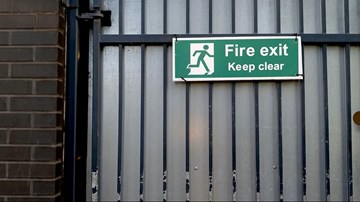
Fire Safety in Offices: What Every Employer and Responsible Person Needs to Know
Fire Safety in Offices: What Every Employer and Responsible Person Needs to Know
Offices can seem like low-risk environments. No industrial machinery, no flammable liquids, no complex manufacturing processes. Just desks, computers, and people getting on with their work.
This perception is one of the most dangerous assumptions in fire safety.
Offices across the UK are subject to the same legal requirements as any other non-domestic premises — and the consequences of getting it wrong are just as severe. Electrical faults, overloaded systems, poor housekeeping, inadequate escape routes, and the rapid rise of hybrid working have all combined to make office fire safety a more complex and pressing issue than many employers realise.
This article sets out everything a responsible person needs to know — from the legal framework and common ignition sources, to fire risk assessments, evacuation planning, and the specific challenges posed by modern office environments.
The Legal Framework: What the Law Requires
In England and Wales, fire safety in offices is governed primarily by the Regulatory Reform (Fire Safety) Order 2005 (the FSO). Under this legislation, the Responsible Person — typically the employer, building owner, or managing agent — has a legal duty to:
- Carry out a suitable and sufficient fire risk assessment of the premises
- Implement and maintain appropriate fire safety measures
- Ensure that staff are informed and trained in fire safety procedures
- Prepare and maintain a fire emergency plan
- Review the fire risk assessment regularly, and whenever significant changes occur
Where five or more people are employed, the fire risk assessment must be recorded in writing.
Since October 2023, this recording requirement has been extended further: all Responsible Persons, regardless of the number of employees, must now record their fire risk assessment in writing and ensure it is available for inspection.
Failure to comply is a criminal offence. Penalties include unlimited fines and, in the most serious cases, imprisonment of up to two years.
For office occupiers who lease their premises, it is important to understand that the legal duty may be shared between the tenant (as employer) and the landlord or managing agent (as the person responsible for common parts and shared systems). Both parties need to be clear on their respective obligations — and both can be prosecuted for failures within their area of responsibility.
Common Causes of Office Fires
Understanding how fires start in offices is the first step in preventing them. The most frequent causes include:
1. Electrical Faults and Overloaded Systems
Electrical faults are the single most common cause of office fires. Modern offices place enormous demand on electrical infrastructure — computers, monitors, docking stations, phone chargers, desk fans, coffee machines, and supplementary heaters all drawing power simultaneously, often through extension leads and multi-way adaptors that were never designed for sustained heavy use.
Overloaded sockets, daisy-chained extension leads, damaged cables, and poorly maintained electrical equipment all create ignition risks. The risk is compounded in older office buildings where the electrical installation was designed for far lighter loads than today's technology demands.
Regular Electrical Installation Condition Reports (EICRs) and Portable Appliance Testing (PAT) are essential tools for managing this risk.
2. Kitchen and Catering Areas
The office kitchen is consistently one of the highest-risk areas in any workplace. Unattended toasters, microwaves with food residue, overloaded counter sockets, and cooking equipment left switched on are all common ignition sources.
Grease accumulation in extraction canopies and filters — even in simple office kitchens — creates a fire load that is easily overlooked and can burn with considerable intensity.
3. Paper, Cardboard, and Combustible Storage
Offices generate significant quantities of paper waste, cardboard packaging, and stored documents. These materials are highly combustible and, when accumulated in store rooms, under desks, or in print areas, create a substantial fire load.
Good housekeeping — regular waste removal, controlled storage, and clear desk policies — is a simple and effective fire prevention measure that is frequently underestimated.
4. Heating Equipment
Portable and supplementary heaters are a significant fire risk in offices. Heaters placed too close to paper, curtains, or furniture, left running unattended, or used with damaged cables have caused numerous office fires across the UK.
Many office fire risk assessments specifically flag portable heaters as a concern, and some organisations prohibit their use entirely outside of controlled circumstances.
5. Arson
Deliberate fire-setting is a risk that should not be overlooked, particularly in ground-floor or street-facing offices, buildings with communal entrances, and premises with accessible bin stores. Arson against commercial premises accounts for a significant proportion of serious office fires, and security measures — including controlled access, CCTV, and secure storage of waste — form part of a comprehensive fire safety strategy.
6. Human Error and Inattention
Across all categories, human behaviour remains the most significant variable. Unattended equipment, ignored alarm signals, propped-open fire doors, blocked escape routes, and failure to follow safe working procedures all contribute to preventable fires and, critically, to preventable deaths.
This is precisely why training and a strong fire safety culture are as important as any physical measure.
The Fire Risk Assessment: The Foundation of Office Fire Safety
A fire risk assessment is not a form-filling exercise. It is a structured, thorough evaluation of your office premises — the hazards present, the people at risk, and the measures needed to protect them.
For an office environment, a competent assessor will examine:
Ignition sources — electrical equipment, kitchen areas, heating, hot works, and any other potential sources of ignition within or adjacent to the premises.
Fuel sources — paper, cardboard, furniture, soft furnishings, wall and ceiling linings, and any stored combustible materials.
Means of escape — the number, location, width, and condition of escape routes and final exits; whether they are clearly signed, adequately lit, and free from obstruction at all times; and whether they are sufficient for the number of people likely to be using them.
Fire detection and warning systems — whether the system is appropriate for the size and layout of the premises, regularly tested, and capable of alerting all occupants in the event of a fire.
Emergency lighting — whether escape routes and exit signs remain illuminated if the main power supply fails.
Fire doors — whether fire doors throughout the premises are correctly rated, fitted with self-closing devices and intumescent seals, in good condition, and not being held open or propped.
Firefighting equipment — whether appropriate fire extinguishers are correctly sited, maintained, and understood by relevant staff.
People at risk — including staff with disabilities or mobility impairments, lone workers, visitors, contractors, and anyone else who may be present on the premises.
Management systems — whether the responsible person has adequate procedures in place for maintaining fire safety, including records of testing, maintenance, training, and drills.
The assessment must be reviewed regularly — at least annually — and whenever there is a significant change to the premises, its use, or its occupancy. Refurbishments, changes to office layout, new tenants, and significant increases or decreases in staff numbers all constitute material changes that should trigger a review.
Evacuation Planning: Getting It Right Before It Matters
An evacuation plan is only effective if everyone knows what it says and has practised following it. For offices, this means:
A clearly documented fire emergency plan that sets out what to do on discovering a fire, how to raise the alarm, designated escape routes and assembly points, the roles of fire marshals, and how to account for all persons on the premises.
Appointed and trained fire marshals (also known as fire wardens) — individuals who understand their responsibilities, have received formal training, and are capable of conducting a safe and orderly evacuation including sweep searches of their designated areas.
Personal Emergency Evacuation Plans (PEEPs) for any member of staff, regular visitor, or contractor with a disability or mobility impairment that would prevent them from evacuating independently via the standard escape routes.
Regular fire drills — at least annually for most offices, and more frequently where staff turnover is high or the premises are complex. Drills must be taken seriously, properly recorded, and followed up with a debrief identifying any issues.
Clear assembly points that are far enough from the building to avoid obstruction of the fire and rescue service, and where a headcount can be conducted efficiently.
A common failing in office evacuation planning is the assumption that staff who have worked in a building for years will automatically know what to do. They will not — not unless they have been trained, reminded regularly, and given the opportunity to practise.
The Impact of Hybrid Working on Office Fire Safety
The widespread adoption of hybrid working since the pandemic has introduced a set of fire safety challenges that many offices have not yet fully addressed.
Variable occupancy levels mean that the number of people in the office on any given day may fluctuate significantly. Evacuation plans and fire marshal arrangements that were designed for a fully occupied office may be inadequate — or, on quieter days, may mean that designated fire marshals are not present. Fire safety arrangements must be dynamic enough to account for this variability.
Increased use of personal devices and charging equipment brought in by staff working flexibly — laptops, tablets, portable batteries, and personal phone chargers — adds to the electrical load on office systems and introduces equipment that has not been PAT tested or assessed by the employer.
Hot-desking and flexible workspaces can make it harder to account for all persons during an evacuation, particularly where there is no fixed desk allocation and visitor or contractor attendance is variable.
Reduced occupancy on certain days can create a false sense of security, with maintenance tasks, fire door checks, and housekeeping deferred because "the office is quiet." Reduced occupancy does not reduce fire risk — and in some respects, a quieter office where a fire could go undetected for longer presents a more serious risk, not a lesser one.
Responsible persons should review their fire risk assessments and evacuation plans specifically in light of their current working patterns, not simply rely on arrangements that were put in place before hybrid working became the norm.
Multi-Tenancy Offices and Managed Workspaces
A growing number of businesses occupy offices within multi-tenancy buildings, managed workspaces, serviced offices, or co-working environments. This creates specific fire safety considerations that both tenants and building managers need to understand.
The Responsible Person for common parts, shared escape routes, and building-wide fire safety systems is typically the landlord or managing agent. However, each tenant remains responsible for fire safety within their own demised area — including their own electrical equipment, their own staff training, and their own contribution to keeping shared escape routes clear.
In practice, this means that a tenant in a serviced office cannot simply assume that fire safety is "handled by the building." They have their own legal duties and their own potential liability.
Tenants should request a copy of the building's fire risk assessment, understand the building's evacuation procedures, ensure their own staff are trained accordingly, and raise any concerns about shared areas or systems with the building manager promptly and in writing.
A Practical Compliance Checklist for Office Responsible Persons
If you are responsible for fire safety in an office environment, the following checklist provides a useful starting point:
? A current, written fire risk assessment carried out or reviewed by a competent person
? All significant findings actioned and documented
? Fire alarm system tested weekly (manual call point activation) and formally serviced at least every six months
? Emergency lighting tested monthly and formally serviced annually
? Fire extinguishers inspected annually by a competent engineer
? Fire doors checked regularly — self-closing, no gaps, intumescent seals intact, not propped open
? Escape routes clear, signed, and unobstructed at all times
? Electrical installation subject to regular EICR
? Portable appliances subject to PAT testing
? All staff trained in fire safety procedures on induction and at regular intervals
? Fire marshals appointed, trained, and present whenever the office is occupied
? PEEPs in place for any staff or regular visitors with relevant needs
? Fire drills conducted at least annually and properly recorded
? Fire risk assessment reviewed at least annually and after any significant change
? Records of all of the above maintained and available for inspection
Conclusion: Office Fire Safety Is Not Optional
The relative calm of a well-run office can create a misleading sense of safety. But the legal duties are clear, the risks are real, and the consequences of a failure — whether measured in human cost, financial penalty, or reputational damage — are severe.
A thorough, up-to-date fire risk assessment is the cornerstone of everything. From it flows the training, the procedures, the maintenance regime, and the culture that keeps people safe.
The businesses that manage office fire safety well are not those that react to incidents or enforcement notices. They are the ones that take a proactive, professional approach — understanding that the cost of compliance is always a fraction of the cost of getting it wrong.
For a professional fire risk assessment of your office premises, or for advice on any aspect of fire safety compliance, contact Whale Fire today on 0800 772 0738 or email info@whalefire.co.uk. We work with businesses of all sizes across the UK to ensure they are compliant, prepared, and protected.
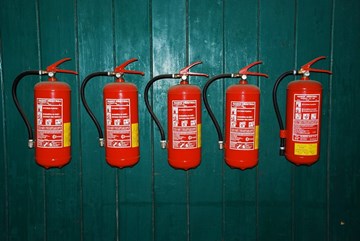
The Costs of Neglecting Fire Safety in the Workplace
Fire safety isn’t just a legal requirement — it’s a fundamental part of protecting people, property, and the long-term future of any organisation. Yet across the UK, many businesses still overlook essential fire safety duties, often assuming that “nothing will happen.” The reality is very different. The costs of neglecting fire safety are severe, wide-ranging, and can threaten the survival of a business.
This article breaks down the true financial, legal, operational, and reputational consequences of poor fire safety management, helping employers understand why proactive compliance is always the cheaper and safer option.
1. Legal Penalties and Unlimited Fines
Under the Regulatory Reform (Fire Safety) Order 2005, employers and responsible persons must ensure their premises meet fire safety standards. Failure to comply can lead to unlimited fines and, in the most serious cases, imprisonment.
Recent UK cases highlight the scale of penalties:
Businesses have been fined over £100,000 for breaches such as blocked escape routes and inadequate fire alarms .
A hospitality venue in Huddersfield received a £160,000 fine for unsafe practices including missing fire doors and poor fire risk assessments .
Since October 2023, the cap on fire-safety fines has been removed, exposing businesses to unlimited financial penalties for non-compliance .
For responsible persons, the stakes are even higher: serious breaches can result in criminal charges and up to two years’ imprisonment.
2. Business Disruption and Operational Downtime
Neglecting fire safety can shut a business down overnight.
Fire authorities can issue enforcement or prohibition notices, forcing operations to stop until safety issues are resolved. Even a short closure can cause major financial losses, especially in sectors like hospitality, retail, and manufacturing.
If a fire occurs due to non-compliance, the costs escalate dramatically:
Repairing structural damage
Replacing equipment, stock, and materials
Cancelling contracts and losing customers
Paying staff during closure
Rebuilding operations from scratch
Many businesses never recover. In fact, 25% of UK businesses never reopen after a serious fire incident .
3. Insurance Complications and Increased Premiums
Insurance is not guaranteed if fire safety has been neglected.
Insurers expect evidence of:
Regular fire risk assessments
Working fire alarms and emergency lighting
Maintained fire doors
Staff fire-safety training
If a business cannot demonstrate compliance, insurers may:
Reduce or refuse claims
Invalidate the policy entirely
Increase premiums significantly after an incident
This leaves the full cost of recovery on the business — a financial burden many cannot survive.
4. Reputational Damage and Loss of Trust
A fire caused by negligence damages more than buildings — it damages trust.
Clients, tenants, employees, and the public quickly lose confidence in a business that fails to protect its people. Negative publicity spreads fast, especially when safety breaches are involved.
Reputational damage can lead to:
Lost contracts
Reduced customer confidence
Difficulty attracting new business
Long-term brand harm
Rebuilding trust can take years — and some businesses never fully recover.
5. Impact on Staff Safety, Morale, and Retention
Employees expect a safe workplace. When fire safety is neglected, it sends a clear message that their wellbeing is not a priority.
Consequences include:
Anxiety and reluctance to return to work after an incident
Reduced morale and productivity
Higher staff turnover
Potential injury or loss of life in serious cases
A safe workplace is a motivated workplace. Neglecting fire safety undermines both.
6. Personal Liability for Responsible Persons
Fire safety breaches don’t just affect the business — they can affect individuals.
Responsible Persons may face:
Personal prosecution
Criminal charges
Unlimited fines
Imprisonment in severe cases
Cases involving missing fire doors, blocked escape routes, and inadequate fire risk assessments have already resulted in significant personal penalties across the UK .
7. Why Fire Safety Failures Happen — and How to Prevent Them
Most fire safety failures are avoidable. Common causes include:
Outdated or incomplete fire risk assessments
Poor maintenance of alarms, extinguishers, and fire doors
Blocked or poorly marked escape routes
Insufficient staff training
Failure to review assessments annually or after changes to the premises
Since October 2023, all Responsible Persons must record their fire risk assessment in writing and review it at least annually or after any significant change .
Conclusion: Fire Safety Is an Investment — Not a Cost
The cost of compliance is always lower than the cost of neglect.
By maintaining up-to-date fire risk assessments, ensuring equipment is serviced, training staff, and keeping escape routes clear, businesses protect:
Their people
Their property
Their reputation
Their financial stability
Their legal standing
Fire safety isn’t a box-ticking exercise — it’s a critical part of running a responsible, resilient, and trustworthy organisation.
For all of your fire safety requirements, please contact Whale Fire here Contact Us - Whale Fire

Fire Safety in Hotels: Why a Suitable and Sufficient Fire Risk Assessment Could Save Lives
The Málaga Wake-Up Call
In the early hours of Monday 25 May 2026, emergency services received calls reporting a fire at the Ibis Centro hotel in central Málaga, Spain. Flames had broken out in Le Grand Café on the ground floor and spread rapidly upward through the building. Over 100 guests were evacuated in the middle of the night as thick smoke filled the corridors. What followed was a 17-hour battle for firefighters, with the blaze reigniting in the afternoon and ultimately gutting approximately 70% of the building — leaving it at risk of total structural collapse.
Thankfully, no guests or staff lost their lives. But the incident raises urgent questions that every hotel owner and manager in the UK — and beyond — must ask themselves: Is our building truly prepared? And do we have a fire risk assessment that is genuinely fit for purpose?
The Legal Duty: The Regulatory Reform (Fire Safety) Order 2005
In England and Wales, hotels are subject to the Regulatory Reform (Fire Safety) Order 2005 (RRO). Under this legislation, the Responsible Person — typically the owner, employer, or managing agent — has a legal duty to:
- Carry out a suitable and sufficient fire risk assessment
- Implement and maintain appropriate fire safety measures
- Ensure a fire emergency plan is in place
- Review the assessment regularly, and whenever significant changes occur
Failure to comply is a criminal offence. But beyond the legal obligation, the moral case is simple: guests sleep in your building, often in unfamiliar surroundings, trusting you to keep them safe.
What Makes a Fire Risk Assessment "Suitable and Sufficient"?
A fire risk assessment is not a tick-box exercise or a generic template downloaded from the internet. For a hotel, it must be a thorough, site-specific document that reflects the real risks within your premises. A competent assessor will examine:
1. Ignition Sources and Fire Hazards
Every potential source of ignition must be identified — kitchens, laundries, electrical plant rooms, bar and restaurant areas, guest smoking areas, and maintenance workshops. In the Málaga fire, the blaze started in a ground-floor café, a reminder that food and beverage areas carry significant fire load that must be carefully managed.
2. Building Construction and Fire Spread
The Málaga fire spread with alarming speed, with firefighters reporting that the building's construction — including iron beams, timber elements and acoustic insulation materials — actively accelerated the flames and created hidden pockets of fire within walls and ceilings. Your fire risk assessment must examine how your building is constructed, identify materials that could contribute to rapid fire spread, and ensure that appropriate compartmentation is maintained and not compromised by poorly managed refurbishments or building works.
3. Means of Escape
Hotels present unique life safety challenges. Guests are:
- Sleeping when a fire may break out
- Unfamiliar with the layout
- Potentially intoxicated
- May have mobility impairments or other vulnerabilities
Your assessment must ensure that escape routes are adequate in number, clearly signed, free from obstruction at all times, and appropriately lit — including emergency lighting that functions on power failure. Personal Emergency Evacuation Plans (PEEPs) must be considered for guests or staff with mobility or sensory impairments.
4. Fire Detection and Warning Systems
Early detection is critical in hotels. A suitable automatic fire detection and alarm system — appropriately designed for the size and layout of your premises — can mean the difference between a successful evacuation and a tragedy. The assessment should ensure the system is correctly categorised, regularly tested, and that staff know how to respond when it activates.
5. Firefighting Equipment and Suppression Systems
First-response firefighting equipment, including fire extinguishers and hose reels, must be correctly sited, maintained, and understood by staff. Larger hotels should consider whether an automatic suppression system (sprinklers) is appropriate or required. Had suppression systems been present in Málaga, the outcome for the building — and potentially for life safety — could have been very different.
6. Emergency Procedures and Staff Training
A fire risk assessment is only as good as the people who implement it. Hotel staff work shifts, and many may be agency or seasonal workers unfamiliar with the property. Your assessment must consider:
- A documented fire emergency plan
- Regular fire drills (at least annually, ideally more frequently)
- Staff training in evacuation procedures, the use of first-aid firefighting equipment, and the operation of the fire alarm panel
- Clear roles and responsibilities during an emergency — including who calls the fire service, who sweeps corridors, and who manages the assembly point
7. Review and Revision
A fire risk assessment is a living document. It must be reviewed regularly and whenever there is:
- A change in the use of the premises or any part of it
- A significant refurbishment or change to the building structure
- A change in the number of guests or staff
- A near-miss or fire incident
- A change in legislation or guidance
Don't Forget: Hotels Are Occupied Around the Clock
Unlike offices or retail premises, hotels are occupied 24 hours a day, every day of the year. This places additional demands on fire safety management. Night-time staffing levels are typically reduced, yet the risk of a fire going undetected while guests sleep is at its highest. Your assessment must reflect this reality, and your procedures must be robust enough to function effectively at 2am as well as 2pm.
The Consequences of Getting It Wrong
The Málaga Ibis fire is, fortunately, not a story of fatalities. But history shows us how quickly hotel fires can become catastrophic when fire safety measures are inadequate. The 2025 Kartalkaya ski hotel fire in Turkey claimed dozens of lives — a tragedy that investigators attributed in part to the absence of working smoke detectors, automatic sprinklers, functioning fire alarms, and emergency exit lighting. Guests were left navigating smoke-filled corridors in complete darkness.
These are not distant, isolated events. They are reminders of what can happen when fire safety is treated as an afterthought.
Instructing a Competent Fire Risk Assessor
The RRO requires that where a Responsible Person does not have the competence to carry out a fire risk assessment themselves, they must appoint a competent person to do so. In a hotel setting, this almost always means engaging a qualified, experienced fire risk assessor.
When selecting an assessor, look for:
- Membership of a recognised body such as the Institute of Fire Safety Managers (IFSM) or IFE (Institution of Fire Engineers)
- Demonstrated experience with sleeping risk premises
- A clear, detailed report — not a brief generic form
- A willingness to engage with you on the findings and recommended actions
Summary: Your Fire Safety Checklist
? A current, site-specific fire risk assessment carried out by a competent person
? All significant findings actioned and documented
? Appropriate fire detection and alarm system — tested regularly
? Escape routes clear, signed, and lit at all times
? Staff trained and fire drills completed
? Fire emergency plan documented and communicated
? PEEPs in place for vulnerable guests and staff
? Suppression and firefighting equipment maintained
? Assessment reviewed regularly and after any significant change
Final Thought
The guests who checked into the Ibis Centro in Málaga that Sunday evening had no idea that by 1:30am they would be evacuating into the street in the middle of the night. Your guests have no idea either. But as the Responsible Person for your premises, you have both the legal duty and the moral responsibility to ensure that if the worst happens, everything that could have been done to protect them has been done.
A suitable and sufficient fire risk assessment is not a cost — it is an investment in the safety of every person who walks through your door.
If you would like advice on commissioning a fire risk assessment for your hotel or hospitality premises, or if you have concerns about your current fire safety arrangements, please contact us for expert guidance Contact Us - Whale Fire