Fire Risk Assessment Requirements in London: A 2026 Guide for Businesses, Landlords and Building Managers
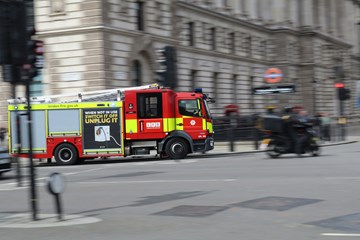
London is one of the most complex fire safety environments in the country. Shops with flats above them, converted Victorian houses split into HMOs, mixed-use office blocks, hotels, restaurants and thousands of high-rise residential buildings all sit side by side. According to London Fire Brigade, around 800,000 premises across the capital fall under fire safety law.
If you own, manage or run any of them, you almost certainly need a fire risk assessment – and the rules have changed significantly over the past few years. This guide explains what the law requires in London in 2026, who is responsible, and what has changed recently.
Which law applies in London?
The main piece of legislation is the Regulatory Reform (Fire Safety) Order 2005, usually called the Fire Safety Order. It applies to virtually all non-domestic premises in England and Wales, and to the common parts of residential buildings such as flats and HMOs.
London has no separate fire safety law of its own. What makes London different is the scale and density of its buildings, and the fact that the Order is enforced in the capital by the London Fire Commissioner, through London Fire Brigade's fire safety inspectors.
The Order has been strengthened several times since the Grenfell Tower fire, most notably by:
- the Fire Safety Act 2021
- the Fire Safety (England) Regulations 2022
- section 156 of the Building Safety Act 2022
- the Fire Safety (Residential Evacuation Plans) (England) Regulations 2025, which came into force on 6 April 2026
Do I need a fire risk assessment?
In short, yes, if you are responsible for any of the following in London:
- shops, offices, warehouses and factories
- pubs, bars, restaurants and takeaways
- hotels, hostels, B&Bs and short-term lets used commercially
- schools, nurseries, places of worship and community halls
- care homes and supported housing
- the common parts of blocks of flats – corridors, stairwells, lobbies, bin stores and plant rooms
- houses in multiple occupation (HMOs)
The law places the duty on the Responsible Person. That is usually the employer, the owner, the landlord, the freeholder or the managing agent – whoever has control of the premises. In many London buildings there is more than one Responsible Person (for example, a freeholder controlling the common parts and a business tenant controlling a shop on the ground floor). Where that happens, they are legally required to cooperate and share information with each other.
What the law now requires
1. The assessment must be written down – for everyone
Before October 2023, a business only had to record its fire risk assessment in writing if it had five or more employees, held a licence, or had been issued an alterations notice. That exemption no longer exists. Since 1 October 2023, every Responsible Person must record the full assessment in writing, regardless of the size of the business.
You must also record your fire safety arrangements – how you plan, organise, control, monitor and review the measures you have in place – and, if you appoint someone to carry out or review the assessment, record their name and, where relevant, their organisation.
2. The assessment must cover the building's structure, external walls and flat front doors
For residential buildings with two or more sets of domestic premises, the Fire Safety Act 2021 confirmed that the assessment must consider the building's structure, its external walls (including cladding, balconies and windows) and the entrance doors to individual flats. This applies to buildings of any height, not just tower blocks – an important point for the many low and medium-rise blocks across London.
3. Extra duties for taller residential buildings
Under the Fire Safety (England) Regulations 2022:
- All blocks of flats with common parts must display fire safety instructions for residents and give them information about the importance of fire doors.
- Buildings over 11 metres must also have regular checks of communal fire doors and best-endeavours annual checks of flat entrance doors.
- High-rise buildings (18 metres or seven storeys and above) have further duties, including providing building plans and external wall information to London Fire Brigade, installing a secure information box, adding wayfinding signage, and carrying out monthly checks of firefighting lifts and equipment.
High-rise residential buildings are also subject to the separate building safety regime under the Building Safety Act, including registration and safety case requirements. That regime sits alongside the Fire Safety Order; it does not replace the need for a fire risk assessment.
4. New evacuation planning duties from April 2026
From 6 April 2026, Responsible Persons for residential buildings that are 18 metres or seven storeys or taller, or over 11 metres with a simultaneous evacuation strategy, have new duties to plan for residents who may need help to escape. In outline, they must:
- use reasonable endeavours to identify residents who may struggle to evacuate without assistance
- offer those residents a person-centred fire risk assessment and, where the resident agrees, an emergency evacuation statement
- prepare and maintain a building-wide emergency evacuation plan
- review the arrangements regularly
All of this is voluntary for the resident, and depends on their consent. London Fire Brigade publicly urged Londoners and building owners to prepare for these changes ahead of the April start date.
Who can carry out a fire risk assessment?
The law says the assessment must be “suitable and sufficient” and carried out by a competent person – someone with enough training, experience and knowledge to do the job properly for that type of building.
At the moment there is no single licence that a fire risk assessor must legally hold. That is changing. The Grenfell Tower Inquiry recommended a mandatory accreditation system for fire risk assessors, the government accepted it in full, and in March 2026 it launched a consultation on mandatory certification for assessors in England, which closed in June. A new British Standard for assessor competence, BS 8674:2025, has also been published.
Until the new rules arrive, the safest approach is to choose an assessor who:
- is listed on a recognised register or third-party certification scheme
- has experience with your type of building – a care home, HMO or high-rise block needs a very different level of expertise from a small office
- carries professional indemnity insurance
- will give you a clear, prioritised action plan, not just a checklist
How often should a fire risk assessment be reviewed?
The law does not set a fixed review date. It requires the assessment to be reviewed regularly and whenever there is reason to believe it is no longer valid. In practice, you should review it:
- after any building works, refurbishment or change of layout
- when the use of the premises changes, or occupancy increases
- after a fire or near miss
- when new legislation comes into force
- at least annually for higher-risk premises such as HMOs, care homes, hotels and blocks of flats
How London Fire Brigade enforces the law
London Fire Brigade inspects premises through routine audits, after fires, and in response to complaints. Where it finds problems, it can issue:
- alterations notices, requiring you to tell the Brigade before making changes to higher-risk premises
- enforcement notices, setting out what must be fixed and by when
- prohibition notices, restricting or stopping the use of all or part of a building immediately
The Brigade publishes the enforcement and prohibition notices it serves on a public register on its website, searchable by borough. In other words, a notice is not only a legal problem but a reputational one. The Brigade has said that over a five-year period it issued more than 200 prohibition notices, most of them to protect people living in unsuitable accommodation.
Serious breaches can lead to prosecution, with unlimited fines and, in the most serious cases, imprisonment.
London-specific risks to watch for
Every building is different, but in London a good fire risk assessment will often need to look closely at:
- Flats above shops and commercial premises, where a fire in the business can cut off the only escape route for residents.
- HMOs and converted houses, where poor fire separation, missing fire doors and inadequate alarms are common.
- E-bikes and e-scooters. London Fire Brigade recorded a record number of lithium-ion battery fires from e-bikes and e-scooters in 2025. Charging and storage in hallways, stairwells and bin stores should be considered as part of your assessment.
- Mixed-use and multi-tenanted buildings, where several Responsible Persons need to coordinate.
- Short-term and holiday lets, which are treated as non-domestic premises under the Order when let commercially.
Quick checklist for London Responsible Persons
- Identify who the Responsible Person is for each part of your building.
- Make sure you have a current, written fire risk assessment.
- Check that it covers the structure, external walls and flat entrance doors if it is a residential building.
- Confirm whether the 2022 Regulations or the 2026 evacuation planning duties apply to your building.
- Use a competent, ideally third-party certified, fire risk assessor.
- Work through the action plan, and record what has been done.
- Review the assessment regularly and after any significant change.
How Whale Fire can help
Whale Fire carries out professional fire risk assessments and provides practical fire safety solutions for businesses, landlords and managing agents. If you are unsure whether your London premises meet current requirements – or you have received a letter or notice from London Fire Brigade – get in touch for clear, practical advice.
This article is general guidance and does not constitute legal advice. Requirements depend on the type, size and use of your premises. Contact Us - Whale Fire
SEO details (for WordPress – not for publication)
- SEO title: Fire Risk Assessment Requirements in London (2026 Guide)
- Meta description: What the law requires for fire risk assessments in London in 2026: who needs one, recent changes, assessor competence and how LFB enforces the rules.
- Suggested slug: /fire-risk-assessment-requirements-london/
- Focus keyphrase: fire risk assessment London
- Suggested tags: fire risk assessment, London, Fire Safety Order, responsible person, London Fire Brigade, RPEEPs

Bootle House Fire: E-Scooter Battery Confirmed as Cause – What Every Household and Landlord Needs to Know
A mother and her three children died in a house fire in Bootle, Merseyside, on Tuesday 22 September 2026, and the fire service has now confirmed the cause was a lithium-ion battery for an e-scooter.
Elisha Brabin, 36, and her children Leo, 16, Ellis, 8, and Prudence, 7, were found in an upstairs bedroom of their semi-detached home in Stone Square. Crews were called shortly before 3:45am and found the house already well alight, with fire spreading rapidly. A fifth person was taken to hospital with burns. Our thoughts are with their family, friends and the whole Bootle community.
Merseyside Fire and Rescue Service (MFRS) has confirmed the battery belonged to an e-scooter but was not fitted to the scooter at the time. It is believed the battery was on charge when the fire started, in the early hours, while the household slept.
As a serving firefighter with more than 26 years in the UK Fire Service, I want to be clear: this is not a freak accident. It is a pattern we are seeing again and again, and much of it is preventable. This article explains what happened, why these fires are so dangerous, and the practical steps every household, landlord and responsible person should take today.
What is thermal runaway?
MFRS said an electrical event caused the battery to go into thermal runaway. In plain terms, the battery starts producing heat faster than it can get rid of it, so its temperature climbs rapidly and out of control.
Once that starts, one damaged cell heats the cells next to it, which then fail too. The result is a chain reaction that can produce:
- Jets of flame, sometimes described by witnesses as "blowtorch-like"
- Loud bangs or small explosions as cells rupture
- Large volumes of toxic, flammable gas and thick black smoke
- Re-ignition, even after the flames appear to be out
This is why battery fires are so different from a typical house fire. There is often very little warning, the fire develops in seconds rather than minutes, and the smoke alone can make an escape route impassable. When it happens at night, on a charger in a hallway or bedroom, the people upstairs may have almost no time to get out.
A growing problem
Merseyside alone recorded 150 fires linked to lithium-ion batteries between April 2023 and August 2026, with five deaths, according to MFRS. That figure is from one county, before the Bootle fire, and the picture is similar right across the UK.
E-bikes and e-scooters are a big part of this. They carry large battery packs, they are often charged indoors overnight, and many are bought cheaply online, second-hand, or fitted with replacement batteries and chargers of unknown quality. Fire services nationally have been warning about this trend for several years, and every one of us on the front line has attended these incidents.
How to charge and store e-scooter and e-bike batteries safely
Most battery fires we attend start during charging. These steps cut the risk significantly:
- Never charge overnight or while you are out. Charge while you are awake and at home, and unplug as soon as it is full.
- Never charge or store on an escape route. Hallways, stairs and the space by the front door are the worst places, because a fire there traps everyone upstairs.
- Keep it out of bedrooms. If a battery fails while you sleep, you may not wake in time.
- Use the manufacturer's charger. Cheap or "universal" chargers may not have the right cut-off protection.
- Buy from reputable sellers. Avoid unbranded batteries, conversion kits and second-hand packs whose history you don't know.
- Charge on a hard, flat surface. Keep it away from soft furnishings, clothes, paper and anything that burns.
- Let it cool before charging. Give the battery time to cool down after a ride, and don't charge it in direct heat.
- Don't tamper with or repair batteries. Damaged packs should be replaced, not taped up or rebuilt.
- Fit and test smoke alarms. Have a working alarm on every level of the home, and one where you charge. Test them monthly.
- Close internal doors at night. A closed door can hold back fire and smoke long enough for you to escape.
If a battery does catch fire: get out, stay out and call 999. Do not try to put it out yourself, and do not go back in.
Warning signs your battery may be failing
MFRS has urged people to stop using a lithium-ion battery immediately if it shows any of these signs:
- Swelling, bulging or a split casing
- Unusual noises, such as hissing, popping or crackling
- A strong or unusual smell
- Failing to charge, or losing charge much faster than normal
- Smoking, or getting unusually hot
I would add one more: if the scooter or bike has had a heavy knock, been dropped, or been left out in the rain, get the battery checked. Internal damage is not always visible, and a damaged cell is exactly the kind of fault that can lead to thermal runaway.
A failing battery should be disposed of safely at a recycling centre that accepts batteries. Never put it in household waste, where it can cause fires in bin lorries and waste sites.
What this means for landlords, HMOs and responsible persons
If you manage flats, HMOs, student housing, hotels, offices or workplaces, e-scooter and e-bike batteries now need to be part of your fire risk assessment. Under the Regulatory Reform (Fire Safety) Order 2005, the responsible person must identify fire hazards and reduce the risk from them. Lithium-ion batteries are a clear, foreseeable hazard.
Practical questions your fire risk assessment should answer:
- Where are residents or staff charging devices? Are they being charged in corridors, stairwells or communal areas?
- Are escape routes kept clear? Scooters and bikes left in hallways block exits and add fuel to a fire in the very place people need to escape through.
- Do you have a clear policy? Tenancy agreements, house rules or workplace policies should say where e-mobility devices can and cannot be stored and charged.
- Is detection suitable? Check that your alarm system covers areas where charging is likely to happen.
- Is there a safer alternative? A designated, well-ventilated storage or charging area away from escape routes can reduce the risk considerably.
- Have occupants been told? Share clear, simple safety guidance with tenants, guests and staff.
A fire risk assessment is a living document. If e-bikes and e-scooters have appeared in your building since it was last reviewed, it needs updating.
Extinguish the risk
The loss of Elisha, Leo, Ellis and Prudence is a heartbreaking reminder of how quickly a lithium-ion battery fire can turn deadly. The simplest changes, like never charging overnight and never charging on an escape route, could save a life in your home.
Please share this article with family, friends and neighbours, especially anyone with an e-scooter or e-bike in the house.
If you are a landlord, business owner or responsible person and want to be sure your premises are properly assessed for lithium-ion battery risks, Whale Fire can help. Our fire risk assessments are carried out with the practical insight of more than 26 years on the front line. Get in touch with Whale Fire to book your fire risk assessment today.
The Importance of Fire Risk Assessments in London
London is one of the most complex places in the country to manage fire safety. Old buildings sit alongside new towers, shops sit beneath flats, and offices, restaurants, hotels and shared housing are packed into tight streets. For anyone responsible for a building in the capital, a fire risk assessment is a legal requirement and one of the most important tools for keeping people safe.
As a serving Watch Commander with more than 26 years in the UK Fire Service, I've seen first-hand what happens when fire safety is left to chance, and how often a proper assessment would have made the difference.
What is a fire risk assessment?
A fire risk assessment is a structured, written review of a building that identifies fire hazards, the people at risk, and the measures needed to reduce that risk to an acceptable level. It looks at how a fire could start, how it could spread, how people would be warned, and how they would escape.
It results in a clear action plan, prioritised so that the most serious issues are dealt with first.
Who needs one?
Under the Regulatory Reform (Fire Safety) Order 2005, the "Responsible Person" for almost any non-domestic premises in England must make sure a suitable and sufficient fire risk assessment is carried out and kept under review. The Responsible Person is usually the employer, owner, landlord, managing agent or anyone else in control of the premises.
In London, that covers:
- Offices, shops and warehouses
- Pubs, restaurants, bars and hotels
- Schools, nurseries, gyms and places of worship
- The common parts of blocks of flats and houses in multiple occupation (HMOs)
- Mixed-use buildings, such as flats above shops
- Care homes, hostels and short-term lets
If you're unsure whether your building is covered, it almost certainly is. Private single-family homes are the main exception.
Why London carries particular risk
Fire safety law applies across England, but London presents challenges that make getting it right especially important.
The building stock is old and heavily altered. Many London properties are Victorian or Edwardian buildings that have been converted, extended and subdivided over decades. Each alteration can create gaps in fire separation, compromise escape routes or hide problems behind new finishes.
Mixed use is everywhere. A takeaway kitchen with flats above, or a basement bar beneath offices, brings very different risks under one roof. A fire in one part of the building can quickly threaten people in another.
High-rise and high-density living. London has more tall residential buildings than anywhere else in the UK. When fire spreads in these buildings, the number of people affected can be very high.
Transient occupants. Hotels, hostels, short-term lets and student accommodation are full of people who don't know the building, can't find the exits quickly and may be asleep when a fire starts.
The legacy of Grenfell. The Grenfell Tower fire in North Kensington in 2017, which claimed 72 lives, changed fire safety in this country for good. Much of the legislation that now applies to buildings across England came directly out of the lessons learned there.
What the law now requires
Since Grenfell, the law has been tightened in several important ways:
- The Fire Safety Act 2021 made clear that, in multi-occupied residential buildings, the assessment must cover the structure, external walls (including cladding and balconies) and flat entrance doors.
- The Fire Safety (England) Regulations 2022 introduced extra duties for residential buildings, including regular checks of communal fire doors in buildings over 11 metres, and further requirements for buildings over 18 metres, such as secure information boxes, wayfinding signage and sharing floor plans with the fire service.
- The Building Safety Act 2022 strengthened the Fire Safety Order so that all Responsible Persons must record their full fire risk assessment in writing, record who carried it out, and share fire safety information with others who have duties in the same building.
Competence is changing too
The law already requires that an assessment is carried out by a competent person, and the definition of "competent" is now becoming much clearer. The British Standards Institution has published BS 8674:2025, a code of practice setting out a framework for the competency of individual fire risk assessors, and this is a key step towards the Grenfell Tower Inquiry Phase 2 recommendation for mandatory accreditation of fire risk assessors. Griffiths & ArmourGriffiths & Armour
The Government in England has confirmed that mandatory competence requirements for fire risk assessors will be introduced, and it has run a consultation on establishing consistent, mandatory competency requirements. The exact timeline has not yet been legislated, but the direction of travel is clear. For building owners and managers, the message is simple: check who is carrying out your assessment, and ask to see their qualifications and experience. Understanding The Framework For Fire Risk Assessor Competency - The Fire Safety Event 2026 +2
What happens if you don't comply?
In London, the Fire Safety Order is enforced by the London Fire Brigade, and it does not hesitate to act. The consequences of failing to have a suitable assessment can include:
- Enforcement, alteration or prohibition notices, which can restrict or close your premises
- Unlimited fines
- Up to two years' imprisonment in the most serious cases
- Problems with insurance claims after a fire
- Serious damage to your reputation
Far worse than any of these is the possibility that someone is hurt or killed in a fire that could have been prevented.
How often should it be reviewed?
A fire risk assessment must be kept under regular review. Most competent assessors recommend a review at least once a year, and sooner if:
- The building is altered, extended or refurbished
- The use of the building changes
- The number or type of people using it changes
- New equipment or processes are introduced
- There is a fire or near miss
An assessment that sits in a drawer for years is unlikely to satisfy an inspecting officer.
Can you do it yourself?
For a very small, simple premises, a Responsible Person with enough knowledge may be able to complete their own assessment. In London, where so many buildings are older, mixed-use or residential, the judgements involved around compartmentation, fire doors, alarm systems and escape routes are often technical. A professional assessment gives you a clear, defensible record that you have taken your legal duties seriously.
If you manage shared housing, see our guide: Do London HMOs Need a Fire Risk Assessment? What Every Landlord Must Know.
How Whale Fire can help
Whale Fire Ltd is based in the City of London and carries out fire risk assessments across the capital and nationally, for offices, residential blocks, HMOs, hotels, pubs, warehouses and more. Our reports are site-specific, easy to read and give you a clear, prioritised action plan, with no tie-in contracts.
To book a fire risk assessment or discuss your premises, call 0800 772 0738, email info@whalefire.co.uk, or get in touch here.
Whale Fire — Extinguish the Risk.
Do London HMOs Need a Fire Risk Assessment? What Every Landlord Must Know
If you own or manage a House in Multiple Occupation (HMO) in London, a fire risk assessment isn't optional paperwork — it's a legal duty, and one that London's enforcement authorities take seriously. With HMOs carrying a significantly higher fire risk than single-family lets, landlords who get this wrong face far more than a slap on the wrist.
Here's what you actually need to know.
What Counts as an HMO?
A property is generally classed as an HMO if it's occupied by three or more people from two or more separate households who share facilities such as a kitchen or bathroom. Many London boroughs go further, operating additional or selective licensing schemes that bring even more privately rented properties into scope — so it's always worth checking your specific borough's rules, not just the national baseline.
The Legal Requirement
The core legal duty comes from the Regulatory Reform (Fire Safety) Order 2005 (RRFSO). It applies to the common parts of any multi-occupied residential building — hallways, landings, shared kitchens, stairwells, and communal lounges — and it places responsibility squarely on the "Responsible Person," which in most cases means the landlord or managing agent.
Under the Order, the Responsible Person must:
- Carry out a suitable and sufficient fire risk assessment of the common parts
- Identify fire hazards and the people at risk
- Put in place, and maintain, adequate fire precautions
- Keep the assessment under regular review, and update it whenever the building, its use, or its occupants change
- Ensure the assessment is carried out by a competent person
This duty applies regardless of the size of the HMO or whether it's formally licensed. If you manage shared housing in London, the RRFSO applies to you.
On top of this, the Housing Act 2004 and your local authority's licensing conditions add further requirements for licensable HMOs — including specific fire alarm grades, fire door standards, and escape route provisions that go beyond the general RRFSO duty. These borough-level conditions are not just best-practice guidance; they form part of your legal obligations as a licence holder.
Why London Enforcement Is Particularly Strict
The London Fire Brigade and London borough councils have a well-established track record of enforcing fire safety standards in shared housing, and HMOs are a recognised priority area. This is because HMOs statistically carry a higher risk of fire, and because a single event can put multiple unrelated households in danger at once — escape routes, compartmentation, and early warning systems all matter more than they would in a single-family home.
A missing or inadequate fire risk assessment is treated as a serious compliance failure, and enforcement teams do not need much persuading to act on it.
What Happens If You Don't Comply
The consequences of non-compliance for HMO landlords in London can be severe:
- Unlimited fines, with no upper cap set by the courts
- Prohibition or improvement notices, which can restrict or close down use of the property until issues are resolved
- Rent Repayment Orders, allowing tenants to reclaim rent paid during a period of licensing or safety non-compliance
- Criminal prosecution, in the most serious cases — including for landlords who fail to act on known hazards
- Loss of your HMO licence, effectively ending your ability to legally operate the property as shared housing
- Invalidated insurance, if a claim arises and the property is found not to have been compliant
Councils increasingly expect to see documented evidence, not just a completed assessment sitting in a drawer — think alarm test logs, emergency lighting checks, and fire door inspection records, alongside the assessment itself.
What a Fire Risk Assessment Actually Covers
A proper HMO fire risk assessment isn't a five-minute walkthrough. A competent assessor will examine:
- Escape routes and means of final exit
- Fire detection and alarm systems (grade and category appropriate to the property)
- Fire doors, self-closers, and compartmentation between units
- Structural fire separation between flats/rooms
- Emergency lighting in common areas (for larger HMOs)
- Furnishings and fire loading in shared spaces
- Electrical installations and obvious ignition risks
The output should be a clear, written report: a risk rating, a list of identified hazards, and a prioritised action plan for addressing them — not just a tick-box form.
How Often Should It Be Reviewed?
As a general rule, treat your fire risk assessment as valid for around 12 months, or sooner if:
- There's a change to the building's layout or use
- Occupancy changes significantly
- Works are carried out that affect fire safety (renovations, conversions, new tenants)
- A fire incident occurs, however minor
An assessment that's a few years old — even if nothing has visibly changed — is unlikely to satisfy an inspecting officer or hold up if something goes wrong.
Can You Do It Yourself?
Technically, the law requires only a "competent person," not necessarily an external professional. In practice, this is one area where cutting corners carries real risk. HMO fire safety involves technical judgements — alarm grading, fire door specification, compartmentation standards — that go well beyond common sense, and a DIY assessment offers you none of the legal protection that a properly documented, professional assessment provides if things are later challenged.
The Bottom Line
If you're managing an HMO anywhere in London, the question isn't whether you need a fire risk assessment — it's whether yours is current, thorough, and properly documented. Given the scale of the fines, the risk of licence revocation, and above all the safety of your tenants, this is not an area where "good enough" should apply.
Whale Fire Ltd carries out professional fire risk assessments for HMO landlords and managing agents across London, giving you a clear, compliant, and properly evidenced assessment — and the peace of mind that comes with knowing your legal duties are covered. Get in touch to discuss your property. Contact Us - Whale Fire
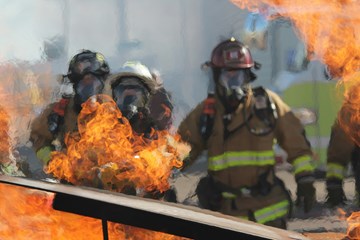
Suffolk Wildfire: What a 371-Acre Blaze Tells Us About Wildfire Risk in the UK
A major wildfire that tore through heathland at Dunwich, on the Suffolk coast, has now burned for several days, destroying an area equivalent to around 210 football pitches. The blaze, which started at RSPB Minsmere on a Wednesday evening and spread onto the National Trust's Dunwich Heath, has been described by the charity as leaving the landscape "unrecognisable" — and its effects will be felt for years to come.
While the fire is now stable, thanks to extensive firebreaks dug by Suffolk Fire and Rescue Service, it's a striking reminder that wildfire is no longer a risk confined to the height of a heatwave or to remote countryside. It's a live operational challenge that fire and rescue services, landowners, and businesses across the UK increasingly need to plan for.
What Happened
The fire began at RSPB Minsmere and spread rapidly across dry heathland toward Dunwich Heath, ultimately affecting around 150 hectares. Suffolk Fire and Rescue Service treated it as a major incident, deploying up to ten fire appliances at the peak of daytime operations and creating firebreaks up to 12 metres wide around the entire site to stop flames and embers spreading further. Nearby Leiston Abbey was evacuated as a precaution, with a local boarding school stepping in to house displaced groups.
The site sits only a few miles from the Sizewell B nuclear power plant, underlining how wildfire risk can intersect with critical national infrastructure even when the fire itself poses no direct threat to a facility.
Why This Matters Beyond Suffolk
For anyone responsible for fire risk assessment, this incident is a useful case study in several respects:
- Wildfire is now a mainstream UK risk, not an exceptional one. Prolonged dry spells and changing weather patterns are making heathland, moorland, and forested sites more vulnerable across the country, not just in traditionally fire-prone regions.
- Major incidents strain fire and rescue capacity. When a service commits significant resources to a large-scale wildfire over several days, its capacity to respond quickly elsewhere is reduced. This is a factor worth building into risk assessments for premises in rural or semi-rural areas, particularly those some distance from a fire station.
- Sites near sensitive infrastructure carry extra weight. The proximity of this fire to a nuclear power station is a reminder that fire risk assessments for infrastructure, industrial, and commercial sites near natural land should factor in external wildfire exposure, not just risks originating within the building or site boundary.
- Firebreaks and land management are genuine mitigation tools. The creation of wide firebreaks was credited with stabilising this fire. Landowners and site managers with adjoining heath, grass, or woodland should consider whether vegetation management, cleared perimeters, or coordination with the local fire service form part of their existing fire safety planning.
- Recovery timelines are long. The charities involved have been clear that ecological and landscape recovery will take years. The same is often true of commercial or heritage sites damaged by fire — a point worth factoring into business continuity planning, not just prevention.
The Fire Risk Assessment Angle
Most fire risk assessments understandably focus on risks that originate inside a building — electrical faults, storage of combustibles, escape routes, and so on. Incidents like this highlight the value of also considering external and environmental fire risk, especially for:
- Rural or semi-rural commercial premises
- Sites adjoining heathland, grassland, moorland, or woodland
- Infrastructure or industrial sites in areas with limited fire service coverage
- Heritage or environmentally sensitive locations where recovery from fire damage is slow and costly
A thorough fire risk assessment should account not only for how a fire might start inside a premises, but how a fire starting nearby — including a wildfire — could affect access, evacuation, and the availability of emergency response.
If your business or site sits near open land, now is a sensible time to review whether external fire risk has been properly considered as part of your fire safety planning. Contact Us - Whale Fire
"Tinderbox" Britain: Why This Summer's Heatwave Is Turning Gardens and Outbuildings Into Fire Risks
"Tinderbox" Britain: Why This Summer's Heatwave Is Turning Gardens and Outbuildings Into Fire Risks
Britain is in the grip of one of its driest, hottest summers in decades. With weeks stretching by in some areas without meaningful rainfall, and temperatures repeatedly climbing past 30°C, fire and rescue services across the country are issuing an unusually blunt warning: your back garden could be the next fire scene.
In recent days, fire crews in London have battled major blazes that tore through residential gardens, destroying sheds, fences, and outbuildings, and in at least one case gutting a house, after fire jumped from garden to garden in strong winds. Incident commanders have described the speed of the spread as extraordinary — flames moving through tinder-dry vegetation, timber sheds and garden waste far faster than crews could contain them, with gas cylinders in some gardens needing to be cooled for hours to prevent explosions.
It's a stark reminder that fire risk isn't confined to commercial premises, high-rise cladding, or industrial sites. This summer, it's arriving over the garden fence.
Why Gardens Are Burning So Easily
A combination of factors has turned ordinary back gardens into genuine fire hazards:
- Prolonged dry weather has left lawns, hedges, and shrubs dried out and highly combustible, while parched soil means plants offer little natural resistance to fire.
- Hosepipe bans in several regions mean gardens that would normally be kept damp are instead bone dry, removing one of the simplest natural firebreaks homeowners have.
- Strong winds have repeatedly been cited by fire services as the reason blazes have spread so rapidly from garden to garden, jumping fences and hedgerows within minutes.
- Outbuildings and sheds, often built from untreated timber and packed with paint, fuel, gas canisters, or gardening chemicals, act as ready fuel sources once fire reaches them.
- Compost heaps and garden waste piles, especially if left dry, can smoulder and ignite far more easily than most people realise.
None of these factors are exotic. They exist in ordinary gardens up and down the country — which is exactly why fire chiefs are urging households to take the threat seriously now, rather than after a fire has already taken hold.
What Fire Services Are Recommending
Following recent incidents, London Fire Brigade and other services have urged residents to create "firebreaks" around their homes and gardens. In practice, this means:
- Keeping grass cut short (ideally below around 7cm), since shorter, greener growth burns less readily than long, dry grass.
- Clearing dead leaves, especially from gutters and against fences or sheds, where they can act as kindling.
- Positioning sheds, wood piles, and garden furniture away from the house itself, so that if they do catch fire, they're not an immediate bridge to your property.
- Cutting back trees and shrubs that grow close to the house.
- Keeping compost heaps damp and away from buildings, and maintaining a sensible balance of "green" and "brown" material to reduce the risk of spontaneous combustion.
- Where hosepipe bans are in force, using water butts or greywater to keep vulnerable areas damp rather than letting them dry out completely.
Beyond the Garden: What This Means for Property Owners and Businesses
For homeowners, this is sound seasonal advice. But for landlords, property managers, and businesses with outdoor areas — gardens, yards, storage compounds, or outbuildings attached to commercial premises — this summer's conditions raise a more serious question: has your fire risk assessment actually considered external fire spread?
Many fire risk assessments focus heavily on the building itself: escape routes, alarm systems, compartmentation, fire doors. External fire risk — vegetation, waste storage, fuel and gas storage, the proximity of combustible outbuildings to occupied buildings — is sometimes treated as an afterthought, if it's considered at all. This summer is showing exactly why that gap matters. Fire doesn't need to start inside a building to threaten the people in it; it just needs a dry, combustible path to travel along.
If you're responsible for a property — whether that's a family home with a shed full of tools and paint tins, a rental property with an overgrown garden, or commercial premises with an outdoor storage yard — now is the time to walk the perimeter and ask some honest questions:
- Is there dry vegetation, waste, or combustible material close to the building?
- Are outbuildings positioned in a way that a fire in one could realistically spread to another, or to the main property?
- Are gas cylinders, fuel, or chemicals stored safely, away from potential ignition sources, and clear of anything that could burn readily around them?
- Would your escape routes and access for fire crews still work if the garden or yard itself were on fire?
Don't Wait for the Next Blaze
Extreme weather isn't going away, and this pattern — long dry spells followed by fast-moving, wind-driven fires — is one UK households and businesses are likely to see more of in years to come. A proper fire risk assessment doesn't just tick a compliance box; it identifies exactly these kinds of overlooked, seasonal risks before they turn into a call to the fire brigade.
If you're responsible for a property and you're not confident that external fire risks — gardens, outbuildings, storage areas — have been properly assessed, now is the time to get it checked, not after the next heatwave headline.
Whale Fire specialises in thorough, practical fire risk assessments that look at the whole picture — not just the building, but everything around it. Get in touch to make sure your property is protected before the next tinderbox summer Contact Us - Whale Fire
Twelve Crews, One Joinery: What the Hollesley Blaze Teaches Us About Fire Risk
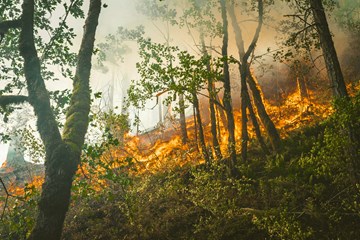
A large fire at James Allen Joinery on Lodge Road in Hollesley, Suffolk, has once again shown how quickly a workshop fire can escalate — and how much it can demand of the fire service, local businesses, and the surrounding community. As a Watch Commander with over 26 years in the Fire Service, incidents like this are exactly the kind of case study worth breaking down for anyone responsible for fire safety in a commercial premises.
What Happened
Suffolk Fire and Rescue Service was called to the scene shortly before 9am on Thursday 9 July, after multiple reports of a blaze at the joinery business. A dozen fire crews attended from stations across the county — Ipswich East, Ipswich Princes Street, Saxmundham, Felixstowe, Framlingham, Beccles, Needham Market, Haverhill, Newmarket, Stowmarket, Bury St Edmunds and Long Melford — alongside specialist appliances including an aerial ladder, rescue tender, water carrier and command support vehicle.
By the time crews arrived, the building — roughly 30 metres by 15 metres — was already around 90% involved in fire. The premises contained gas cylinders and had an asbestos roof, both significant complicating factors for any incident commander. Firefighters used three hose jets, two larger hose lines, and a hydrant, supported by a water relay system, and deployed an aerial ladder as a water tower to reach the fire in the middle of the workshop. The fire was reported under control by around 11:10am, though crews remained on scene for several hours afterwards, with relief units arriving to support the original teams. No casualties were reported, and The Salvation Army was requested to provide welfare support for firefighting crews — a detail that says a lot about the scale and duration of the operation.
Notably, the incident also drew in the local farming community: nearby farmer Thomas Buckle supplied fire crews with water via an irrigation pump, with an estimated 10,000 litres used to help control the flames, after station manager Alex Smith highlighted that water resources in the area were limited.
Why This Incident Matters for Fire Risk Assessments
Every large-scale commercial fire offers lessons for other businesses, and this one raises several points worth flagging for any premises with a similar risk profile.
1. Joinery and woodworking premises are high fuel-load environments
Timber, sawdust, finishes, and stored materials all add up to a significant fuel load. Once ignition takes hold in a workshop like this, fire can spread rapidly through stock, machinery, and structural timber before crews arrive — which is consistent with how quickly this building reportedly became fully involved.
2. Stored cylinders change the entire risk calculation
The presence of gas cylinders inside the building is a critical detail. Compressed or flammable gas cylinders can fail catastrophically when exposed to fire, and their presence directly shapes how incident commanders approach tactics, exclusion zones, and crew safety. If your business stores cylinders on site — for welding, heating, or process use — your fire risk assessment needs to address safe storage location, separation distances, signage, and what the fire service needs to know if called to your premises.
3. Asbestos roofing adds a layer of complexity
An asbestos roof significantly affects both firefighting tactics and the post-incident environment. Fire damage to asbestos materials can release fibres, creating an additional hazard for firefighters, investigators, and anyone returning to the site afterwards. If your building has legacy asbestos materials, your fire risk assessment and your asbestos management plan need to talk to each other — not sit in separate drawers.
4. Water supply is not guaranteed in rural locations
The reliance on farm irrigation equipment to supplement hydrant supply is a striking reminder that firefighting water availability varies significantly by location. Rural and semi-rural commercial premises should never assume mains water pressure and hydrant coverage will be sufficient — this is something a competent fire risk assessment should specifically consider, including whether additional water supply arrangements (static tanks, agreements with neighbouring landowners, etc.) are appropriate.
5. Dry weather conditions increase external fire spread risk
Reports from the scene noted that dry conditions contributed to the fire spreading to nearby vegetation. As UK summers trend hotter and drier, businesses with adjacent hedgerows, grassland, or vegetation need to factor wildfire-style spread into their site risk picture, not just internal fire spread.
The Takeaway for Business Owners
Incidents like Hollesley don't happen because someone was careless — they happen because risk factors stack up: combustible materials, stored gases, legacy building materials, and site-specific challenges like water supply. A proper fire risk assessment doesn't just tick a compliance box; it identifies exactly these kinds of compounding risks before they combine into a 12-crew, day-long incident.
If your business handles timber, stores cylinders, occupies an older building with legacy materials like asbestos, or sits somewhere firefighting water supply might be a challenge, now is a good time to review your fire risk assessment — not after an incident like this one.
Whale Fire Ltd helps businesses across the UK identify and manage exactly these risks. Get in touch if you'd like a professional fire risk assessment for your premises. Extinguish the Risk. Contact Us - Whale Fire
Sources: East Anglian Daily Times, "Farmers praised for support in tackling Hollesley fire" and "Hollesley farmer assists firefighters during day long blaze," 10 July 2026; BBC News, "Twelve fire crews tackle large joinery blaze in Hollesley," 10 July 2026.
Lithium-Ion Batteries: The Fire Risk Landlords Can No Longer Afford to Ignore
London Fire Brigade figures for 2025 make sobering reading. Firefighters attended 206 e-bike and e-scooter fires across the capital last year — an average of one every other day. Two people died. Since 2023, that fatality figure now stands at five. In every one of those five deaths, the person killed did not own the e-bike involved.
That last point matters enormously for anyone managing residential property. These are not accidents that only affect the rider. They're happening in shared hallways, communal stairwells and residential blocks, and the people paying the price are often neighbours, family members and other residents who had no involvement with the device at all.
Where the risk is concentrated
Lewisham and Southwark recorded the highest number of incidents in 2025, with 16 each, followed by Tower Hamlets, Lambeth and Westminster. But this isn't a problem confined to a handful of boroughs — it's a London-wide trend, and the underlying causes apply just as much to a converted HMO in Surrey as they do to a tower block in east London. London Fire Brigade data shows these fires occur disproportionately in high-rise residential premises and social housing, which should be of particular concern to anyone managing blocks of flats, HMOs or supported housing.
Around 83% of the fires involved e-bikes rather than e-scooters. Investigations consistently point to the same root causes: lithium-ion battery failure, unregulated conversion kits, and incompatible or faulty chargers. Batteries bought online — whether new or second-hand — that don't meet UK safety standards are especially prone to failure. A significant proportion of e-bike fires involve conversion kits, which typically have no product safety standard applied to them at all, and often leave the end user guessing which battery and charger combination is safe to use.
Why this is now a landlord's problem, not just a rider's
Under the Regulatory Reform (Fire Safety) Order 2005, the Responsible Person for a building — typically the landlord, freeholder or managing agent — has a legal duty to identify fire hazards affecting the common parts and the building as a whole, and to take reasonable steps to reduce the risk to occupants. Lithium-ion battery fires from e-bikes and e-scooters are now firmly within scope of that duty.
In practical terms, that means your fire risk assessment should explicitly consider:
- Whether e-bikes or e-scooters are being stored or charged in communal areas, hallways, or escape routes
- Whether current storage arrangements could obstruct a means of escape in the event of fire
- What information tenants have been given about safe charging and storage
- Whether the building's fire strategy and evacuation procedures account for a fast-developing battery fire, which can produce intense heat and toxic smoke within seconds of thermal runaway beginning
A number of the fatal and serious incidents recorded by London Fire Brigade have involved bikes or batteries stored in communal hallways, precisely because that's often the only practical charging point available to residents in flats without private storage. If your building has this issue, it needs addressing directly rather than left as an informal arrangement between tenants.
Practical steps for landlords and managing agents
Recognising the risk is the easy part. Managing it effectively means:
- Reviewing and updating fire risk assessments specifically to address lithium-ion battery storage and charging, rather than treating it as a generic electrical risk
- Making clear in tenancy agreements or building rules where e-bikes and e-scooters may and may not be stored or charged
- Providing, where practical, a dedicated and appropriately ventilated charging area away from escape routes
- Communicating clearly with residents about the dangers of counterfeit batteries, incompatible chargers and unregulated conversion kits
- Ensuring escape routes and communal areas are never used for storage or charging under any circumstances
The Government has been under sustained pressure from London Fire Brigade to introduce stronger product safety regulation for e-bikes, e-scooters and conversion kits, and further legislation is expected. But regulation of the products themselves won't reduce a landlord's own legal duties in the meantime, and enforcement action following a serious fire will look closely at what the Responsible Person knew and what they did about it.
Having spent 26 years in the fire service, I've attended incidents where a fire that started with a single battery in a hallway spread with a speed that caught everyone by surprise. Lithium-ion fires behave differently to conventional fires — they can escalate from nothing to fully involved in under a minute, and they're notoriously difficult to extinguish once thermal runaway sets in. Prevention, not response, is where the real protection lies.
If it's been a while since your fire risk assessment specifically addressed e-bike and e-scooter charging, now is a sensible time to have it reviewed. Whale Fire carries out fire risk assessments across residential and commercial premises and can help you identify where this emerging risk applies to your building. For all London Fire Risk Assessments please contact us at Contact Us - Whale Fire