Communal areas in flats fire regulations
The fire regulations for the communal areas of flats falls under the Regulatory Reform (Fire Safety) Order 2005, Building Safety Bill and Fire Safety Act 2021 which is due to come into force soon.
The requirement is for the responsible person to carry out a fire risk assessment for the communal areas which should ensure that the flat entrance doors are fire resisting and have self-closing devices.
Each flat should have mains-wired smoke detection. The requirement for a fire detection system in the communal areas depends on whether the flats are converted or purpose-built. It also depends on the number of floors and flats in the building and number of escape staircases.
The fire risk assessment for the communal areas will include all flat entrance doors (although generally speaking only one-two doors need to be checked) so the cost can be shared between all tenants/landlords etc.
For all residential fire risk assessments please enquire here:
https://www.whalefire.co.uk/residential-fire-risk-assessments.aspx
For all London fire risk assessments, please visit here:
https://www.whalefire.co.uk/london/fire-risk-assessments-london.aspx
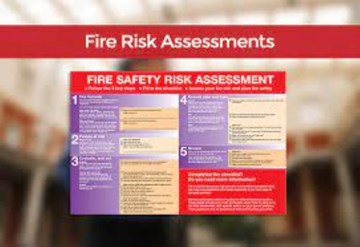
Fire risk assessment communal areas
If you require a fire risk assessment for the communal areas (otherwise known as common parts) of your block of flats, then we would be delighted to help you carry this out.
We have a team of qualified assessors who specialise in carrying out these assessments for both purpose-built and converted blocks of flats. Sometimes these communal areas can comprise of just a few metres and be just a single storey. It is often frustrating for landlords who feel such a small communal area should not be subjected to this legislation.
However, the size of the communal areas is irrelevant as far as the law is concerned but of course, can lead to fewer recommendations in a fire risk assessment report.
We need to know the age of the building, how many flats, floors and communal staircases. Whether you have an existing fire alarm system and emergency lighting is important as well as the location of your gas and electrical meters.
Whatever the answers to these questions, Whale Fire can help and carry out these fire risk assessments to your communal areas quickly and for a competitive fee.
For all London Fire Risk Assessments please visit here:
https://www.whalefire.co.uk/london/fire-risk-assessments-london.aspx
For all other areas of the UK please visit here:
https://www.whalefire.co.uk/contact.aspx
For other questions relating to common parts fire risk assessments you may be interested in the following links. For freeholder fire risk assessments, see here:
https://www.whalefire.co.uk/newsdetail.aspx?id=324
For fire risk assessment when buying a flat, here:
https://www.whalefire.co.uk/newsdetail.aspx?id=315
And selling my flat and need a fire risk assessment, here:
Fire risk assessment template
Whale Fire use a nationally recognised PAS 79 fire risk assessment template which is detailed, well organised and also easy to understand for the client. People often want to know what type of template they should use. The template you use, although important, is not as important as understanding what you are doing and what you need to look for when carrying out the assessment.
You can have the best template in the world but that doesn’t make you a good assessor. Fire risk assessment templates vary from a simple checklist template to a hugely detailed matrix report.
You should adopt a template that works for you and is easy to complete and understand.
You should, however, never think that having a good template will make you a good assessor. A competent experienced fire risk assessor using a bad template would win every time against a bad assessor with a superior template.
For all of your London fire risk assessment requirements, please click on our Fire Risk Assessments page below:
https://www.whalefire.co.uk/london/fire-risk-assessments-london.aspx
Freeholder fire risk assessment
A freeholder fire risk assessment is fundamentally a fire risk assessment that is required for the communal areas of a block of flats (converted or purpose-built) which is required to satisfy the Regulatory Reform (Fire Safety) Act 2005. If you are the freeholder that is responsible for a flat or for the maintenance of the whole building, then it will be your responsibility to obtain a fire risk assessment.
It is sometimes a grey area, confirming who is responsible for a fire risk assessment. If there are say six flats off a communal areas with 6 separate freeholders then you are all jointly responsible for ensuring a fire risk assessment is completed for the communal areas.
It is effectively no different to a Landlord fire risk assessment. The most important thing is that a fire risk assessment is completed for the communal areas rather than arguing about who is responsible and not having one completed.
We specialise in carrying out freeholder and landlord fire risk assessments and can carry these out at short notice if required.
To find our more about our residential fire risk assessments please click here:
https://www.whalefire.co.uk/newsdetail.aspx?id=320
If you are asking ‘Do I need a Fire Risk Assessment to sell my flat, then please see this article here:
https://www.whalefire.co.uk/newsdetail.aspx?id=313
For all London Fire Risk Assessments please click on our Fire Risk Assessments London page here:
https://www.whalefire.co.uk/london/fire-risk-assessments-london.aspx
Playing it cool - Fire safety tips in the heat
London Fire Brigade (LFB) have issued guidance on staying safe during this really hot weather. Its worth a read and gives guidance on how to safely use barbeques and being careful when discarding off cigarettes.
It doesn't take much to start a fire in a field or any areas of forestry in this heat and a simple mistake or act of carelessness can lead to a fire spiralling out of control with all the dry grass, trees, crops and woodland in general.
Just carelessly disposing of a glass bottle around combustible materials can lead to a fire by magnifying the ray from the sun.
Using disposable barbeques safely is very important as these can stay hot long after people believe they are out and if they are left unattended and used near grass, then they could start a fire.
https://lnkd.in/ehYcpS4n
For any fire safety questions in and around the London area please contact Whale Fire on 0800 772 0738 or by emailing us at info@whalefire.co.uk
For all London Fire Risk Assessments please visit our Fire Risk Assessments London page here:
https://www.whalefire.co.uk/london/fire-risk-assessments-london.aspx
Camden Fire
Camden Fire
This recent fire in Camden, London, started in a shop and spread to the residential flats above. LFB extinguished the fire and warned any nearby residents to keep doors and windows closed in the surrounding areas due to a high quantity of smoke from the fire.
From a fire safety perspective, it is an interesting job to note because we often assess either just a shop (with flats above) or just the communal areas of flats (with a shop below).
As I have stated before in previous posts, it is always important to take into account the building as a whole and to consider where a fire could start and where it could spread too.
Is there sufficient compartmentation between the commercial and residential space and a satisfactory escape route from the flats without requiring linked fire detection or is a system needed linking the shops and flats so that a fire in the shop would alert any residential occupants.
We look at the buildings age, construction, height, protection of escape routes etc., amongst many more things we have to consider.
For fire risk assessments in London please visit our fire risk assessments London page here:
https://www.whalefire.co.uk/london/fire-risk-assessments-london.aspx
How much does a fire risk assessment Cost UK?
How much does a fire risk assessment Cost UK?
Good question. Firstly we need to know what your premises are and whether it is a residential or commercial property.
If your property is residential, we need to know whether the flats are converted or purpose-built. We then need to know how many floors and flats you have as well as how many communal entrances and staircases. As a general rule of thumb we charge per the number of floors but we take all of these factors into account. Our residential fire risk assessments start from £175 plus VAT.
If you have a flat and need to obtain a fire risk assessment before you sell it, please see our ‘Do I need a fire risk assessment to see my flat’ news article here:
https://www.whalefire.co.uk/newsdetail.aspx?id=313
If your property is commercial, we need to know what type of premises (office, shop, pub etc). We also need to know how many floors and approximately how many staff members you have. We also like to have an approximate footprint of the building in metres squared to enable us to know the size of the building that needs assessing. Our commercial fire risk assessments start from £350 plus VAT.
To enquire about how much a fire risk assessment costs please call Whale Fire on 0800 772 0738 or via our Fire Risk Assessments enquiry page below: