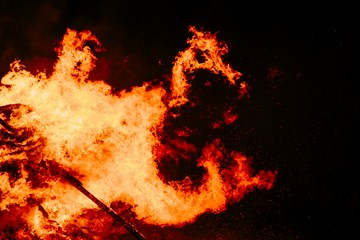
Fifteen people were injured when fire broke out at a hospital in the Lichtenberg district of eastern Berlin on the evening of Sunday 22 November 2026. Police suspect a patient deliberately set fire to his own bed. Nobody died, but the incident is a sharp reminder of how quickly smoke can travel through a building full of people who cannot easily get themselves out, and why fire safety in healthcare settings has to be planned in detail.
What happened
According to the Berlin Fire Brigade, the hospital's automatic fire detection system raised the alarm after a fire started in a patient's room on the first floor of one of the hospital buildings. Firefighters went inside and put the fire out, but smoke had already spread into other parts of the building and part of it had to be evacuated.
Of the 15 people injured, one suffered life-threatening injuries and another was seriously hurt. Both were taken by ambulance to other hospitals. The remaining 13 had minor injuries. A nurse and the patient suspected of starting the fire both inhaled smoke; the nurse was treated and allowed to go home.
Berlin police have opened an investigation into a particularly serious case of arson, and their specialist fire investigation unit is handling the case. The investigation is ongoing, so the full details are not yet known.
Why this matters in the UK
This could just as easily have happened in a UK hospital, care home, mental health unit or supported living scheme. These buildings share the same challenges: people asleep, people on medication, people who can't walk or who depend on staff to move them, and sometimes people who may set fires deliberately.
Under the Regulatory Reform (Fire Safety) Order 2005, the Responsible Person for any of these premises must have a suitable and sufficient fire risk assessment in place, and since October 2023 that assessment must be recorded in full. NHS premises in England should also follow the Health Technical Memorandum 05 series (HTM 05-01, 05-02 and 05-03), which sets out how healthcare fire safety should be managed, designed and operated.
Here are the practical lessons I take from the Berlin fire.
1. Early detection works and buys time
The alarm was raised by the automatic detection system, not by someone happening to notice. In a building where people can't evacuate quickly, those first minutes are everything. Make sure your fire alarm system is the right category for the building and the people in it, that detectors cover bedrooms and patient rooms, and that the system is tested weekly and serviced by a competent engineer. Every false alarm should be investigated, not ignored, so staff never start to treat the alarm as "probably nothing".
2. Smoke injures more people than flames
The fire itself was contained to one room, but smoke still reached other areas and injured 15 people. This is what we see time and again. Smoke spread is controlled by compartmentation: fire-resisting walls and floors, fire doors that close fully and seal properly, and fire stopping around pipes and cables passing through walls. A wedged-open fire door or a gap above a suspended ceiling can undo the whole design. Check your fire doors regularly, look above the ceiling tiles, and fix damage as soon as it's found.
3. Deliberate fire setting must be in your risk assessment
It is uncomfortable to think about, but in hospitals, mental health units and some care settings, a patient or resident may set a fire on purpose. Your fire risk assessment should consider this openly. That means thinking about:
- control of lighters, matches and smoking materials
- bedding, mattresses and furniture with suitable fire-resistant properties for the level of risk
- supervision levels, especially at night
- rooms and areas where a fire could start unseen, such as stores, laundry rooms and bin areas
Where individual residents are known to present a higher risk, this should feed into their care plan as well as the building's fire risk assessment.
4. Have an evacuation plan that works for dependent people
In Berlin, part of the building was evacuated. In most UK healthcare premises, full immediate evacuation isn't realistic, so the strategy is usually progressive horizontal evacuation: moving people away from the fire into the next protected compartment on the same floor, then further if needed. This only works if the compartments are sound, staff know exactly what to do, and there is the right equipment, such as evacuation mats or sledges, for people who can't walk. Personal Emergency Evacuation Plans (PEEPs) should be in place for anyone who needs help to escape.
5. Train staff for real, including at night
A nurse was among those affected by smoke. Staff are often the first on the scene and their instinct is to help. They need clear, practised training on raising the alarm, closing the door on the fire to hold back smoke, moving patients and when not to put themselves at risk. Run drills on night shifts too, when staffing is lowest and the pressure is greatest.
Is your building ready?
Thankfully, nobody died in the Berlin hospital fire, and the early alarm and fire brigade response almost certainly played a part in that. But 15 injuries from a single bedroom fire show how much depends on the building and the people in it working together.
If you're responsible for a hospital, clinic, care home, supported living scheme or any premises where people sleep or need help to escape, now is a good time to make sure your fire risk assessment is current and genuinely reflects the risks.
At Whale Fire, we carry out practical, common-sense fire risk assessments with clear, prioritised actions you can act on. We're NSI accredited and listed on the National Fire Risk Assessor Register. Get in touch through whalefire.co.uk to book your assessment.
Whale Fire – Extinguish the Risk. Contact Us | Whale Fire