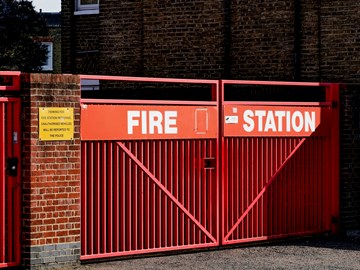
On Thursday evening, 19 November 2026, a fire broke out in a block of flats on St Martin's Lane, in the heart of London's West End between Leicester Square and Covent Garden. At least 20 people were evacuated shortly before 9pm, and four fire engines attended.
Thankfully, police confirmed that the fire was put out and everyone got out safely. One young man was treated by paramedics for burns to his shoulder, and a woman was assessed for breathing difficulties caused by smoke. The London Fire Brigade told residents that temporary alternative housing was being arranged for them.
The cause of the fire hasn't been confirmed, and it would be wrong to speculate. But as a Watch Commander with 27 years in the UK Fire Service, and someone who assesses residential buildings for a living, I want to look at what the reports tell us, and what every landlord, managing agent and Responsible Person for a block of flats should take from it.
What happened
According to reports from The Standard:
- Residents on the third floor found the hallway and fire escape full of smoke when they opened their door.
- One resident said smoke filled her room when she opened her door, and she hesitated to use the stairs until a man helped her down.
- Another resident said she only realised there was a fire when she saw the fire engines outside.
- An elderly woman left the building without her shoes, while her husband stayed behind to help another elderly neighbour down the stairs.
- A group of visitors staying in the building said they were worried about their passports and laptops, but glad to be safe.
None of these details tell us whether the building was compliant or not, and I'm not suggesting it wasn't. But each one points to a part of fire safety that is easy to overlook in a block of flats.
5 lessons for anyone responsible for a block of flats
1. Smoke in the escape route is the real danger
In most fires, it's smoke, not flames, that causes harm. A protected stairway and corridors are meant to stay clear of smoke long enough for people to get out, or for the fire service to work safely.
That depends on things like:
- Fire doors that self-close fully and seal properly, with intact intumescent strips and smoke seals
- Flat entrance doors that haven't been swapped for non-fire-rated doors or had their closers removed
- Smoke ventilation (automatic or manual) that actually works when it's needed
- Compartmentation that hasn't been breached by cables, pipes or alterations
When I assess a block, wedged-open fire doors, broken door closers and holes in walls above ceilings are some of the most common problems I find. They're easy and cheap to fix, but only if someone spots them.
2. Residents need to know what to do
One resident hesitated on the stairs. Another didn't know there was a fire until she saw the engines. That's completely understandable. A fire is frightening, and most people never think about it until it happens.
This is why the Fire Safety (England) Regulations 2022 require the Responsible Person in any building with two or more sets of domestic premises to give residents clear fire safety instructions, including how to report a fire and what to do when one breaks out, and information about the importance of fire doors.
It's also vital that residents know which evacuation strategy applies to their building. Is it "stay put" or full evacuation? If residents don't know, they can't follow it. The strategy should be set out in your fire risk assessment and communicated clearly.
3. Think about the people who don't know the building
Reports mention visitors staying in the building. Whether they were guests, tenants or short-stay visitors, the point is the same: people who are new to a building don't know where the stairs are, how the fire alarm sounds or what the evacuation plan is.
If flats in your block are used for short-term lets or holiday rentals, that should be reflected in your fire risk assessment. Clear signage, fire action notices and information in each flat all matter more when occupants change every few nights.
4. Plan for the vulnerable
An elderly man stayed behind to help an elderly neighbour down the stairs. It's a lovely example of people looking out for each other, but it also shows that not everyone can get out quickly on their own.
A good fire risk assessment considers who lives in the building, including older residents, people with mobility problems and anyone who may need help to escape. Depending on the building, a Person-Centred Fire Risk Assessment or Personal Emergency Evacuation Plans (PEEPs) may be appropriate.
5. Mixed-use buildings bring extra risks
St Martin's Lane is lined with theatres, restaurants, bars and shops, and many residential blocks in central London sit above or alongside commercial premises. Kitchens, extraction ducts, bin stores and late-night trading can all add to the fire risk, and responsibilities can be split between different owners and managers.
Where there is more than one Responsible Person, the law requires them to cooperate and coordinate on fire safety. In practice, that means talking to each other, sharing fire risk assessments and agreeing on things like alarm systems and escape routes.
What the law requires
If you own or manage a block of flats in England, here's a quick reminder of your main duties:
- Regulatory Reform (Fire Safety) Order 2005: you must have a suitable and sufficient fire risk assessment of the common parts, keep it under review and act on its findings.
- Fire Safety Act 2021: makes clear that the assessment must cover the building's structure, external walls (including balconies and windows) and flat entrance doors.
- Fire Safety (England) Regulations 2022: require fire safety instructions and fire door information for residents in buildings with two or more sets of domestic premises, with extra duties for taller buildings, such as regular fire door checks in buildings over 11 metres.
- Building Safety Act 2022 (section 156 changes to the Fire Safety Order): you must record your full fire risk assessment, and anyone you appoint to help you must be competent.
If your fire risk assessment is out of date, or hasn't been reviewed since the building, its use or its occupants changed, now is the time to act.
How Whale Fire can help
At Whale Fire, we carry out fire risk assessments for blocks of flats, HMOs, landlords, managing agents and commercial premises across London, including Westminster, Covent Garden and the West End, as well as cities across the UK.
Our approach is simple: common sense, pragmatic and client-friendly. We'll walk your building, explain clearly what we find and give you a prioritised action plan you can actually work through, without the jargon.
We're NSI accredited, Associate Members of the Institute of Fire Safety Managers (AIFSM) and listed on the National Fire Risk Assessor Register (NFRAR).
Don't wait for a fire to find the gaps.
?? Call us on 0800 772 0738 ?? Email info@whalefire.co.uk ?? Or book your fire risk assessment online
Extinguish the Risk.