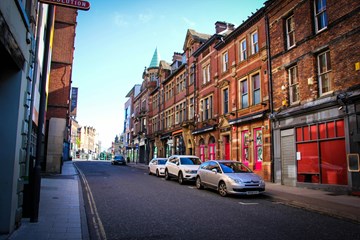
London is one of the busiest, most densely built cities in the world. Offices, shops, restaurants, blocks of flats, HMOs, schools and warehouses sit side by side, often in older buildings that have been converted, extended and re-used many times over. That mix is part of what makes the capital special. It also makes fire safety a serious responsibility for every business owner, landlord and managing agent.
A professional fire risk assessment is the foundation of that responsibility. Here's why it matters, what the law says, and how Whale Fire can help keep your London building and the people in it safe.
Fire in London: the numbers
London Fire Brigade attended 19,542 fire incidents in 2025. They were spread across the capital but were most concentrated in Inner London, with particular hotspots in Westminster, Newham and Tower Hamlets.
One risk is growing faster than any other. There were 521 fire incidents involving lithium-ion batteries in London in 2025, a rise of 28 per cent on the year before. In those fires, 109 people were injured and three people died. E-bikes and e-scooters alone accounted for 206 fires, the highest yearly total on record, and the Brigade says many were caused by faulty or poorly made products bought online or second-hand.
At the same time, London Fire Brigade's first-pump attendance time has risen every year since 2020. Firefighters do an outstanding job, but the best fire is the one that never starts, and the best-protected building is one where risks have been spotted and dealt with before an emergency.
What the law requires
If you own, manage or control a non-domestic building in London, including the common parts of blocks of flats and HMOs, you are likely to be the "Responsible Person" under the Regulatory Reform (Fire Safety) Order 2005. That means you must make sure a suitable and sufficient fire risk assessment is carried out and kept under review.
The rules were tightened on 1 October 2023, when Section 156 of the Building Safety Act 2022 came into force as part of the reforms that followed Grenfell. Since then:
- Every fire risk assessment must be recorded in full. Previously, a written assessment was only required in certain situations, such as where five or more people were employed. Now it applies regardless of the size or type of business.
- Your fire safety arrangements must be written down, showing how fire safety is managed on an ongoing basis.
- If you use a fire risk assessor, you must record their name and, where relevant, their organisation.
- Responsible Persons must cooperate and share information. In shared or multi-occupied buildings, you must take reasonable steps to find out who else has duties for the premises, and share relevant fire safety information with them.
- Residents must be told about the risks identified in the assessment and the fire safety measures in place to protect them.
The Government has also legislated that anyone appointed to carry out or review a fire risk assessment must be competent. That makes choosing the right assessor more important than ever.
Why London buildings need extra care
Every building is different, but London premises often bring particular challenges:
- Older and converted buildings, where alterations over the years may have compromised fire doors, compartmentation and escape routes.
- Mixed-use premises, such as shops with flats above, where several Responsible Persons must work together.
- HMOs and blocks of flats, where residents may store or charge e-bikes and e-scooters in hallways or bedrooms.
- Busy commercial spaces, such as restaurants, hotels and offices, with high occupancy and many people who don't know the building.
- Basements and narrow stairways, common in central London, which can make escape and firefighting harder.
A thorough, on-site fire risk assessment picks up these issues and gives you clear, practical actions to deal with them.
What a Whale Fire assessment includes
At Whale Fire, our approach is common-sense, pragmatic and client-friendly. We don't sell or install fire safety equipment, so our advice is independent: we're there to assess risk, not to sell you products.
A typical assessment covers:
- A full site inspection of your premises, including escape routes, fire doors, compartmentation, alarms, emergency lighting and signage.
- Identification of fire hazards, from electrical equipment and lithium-ion batteries to storage, waste and sources of ignition.
- Who is at risk, including staff, visitors, residents and anyone who may need extra help to escape.
- A clear written report, recorded in full to meet Section 156 requirements, with prioritised, practical recommendations.
- Advice on ongoing management, including review dates, training and record keeping.
Why choose Whale Fire
- Around 20 years' experience assessing buildings of all types.
- NSI accredited, an Associate Member of the Institute of Fire Safety Managers (AIFSM), and listed on the National Fire Risk Assessor Register (NFRAR).
- Independent advice, because we only carry out fire risk assessments and health and safety assessments.
- Reports you can actually use, written in plain English with actions in a clear order of priority.
- A London base at 86–90 Paul Street, EC2A 4NE.
Book your London fire risk assessment
Whether your assessment is overdue, your building has changed, or you simply want peace of mind that you're meeting your legal duties, we can help.
Contact Whale Fire today to arrange a fire risk assessment for your London premises.
Whale Fire: Extinguish the Risk.
Sources
- London Assembly Research Unit: London Fire Brigade data analysis (March 2026)
- London Fire Brigade: record number of e-bike and e-scooter fires across London in 2025 (January 2026)
- Fire Industry Association: record rise in e-bike and e-scooter fires across London (January 2026)
- GOV.UK: Fire safety responsibilities under Section 156 of the Building Safety Act 2022
- Fire and rescue service guidance on Section 156 (Devon & Somerset, Merseyside, North Yorkshire, Northamptonshire)