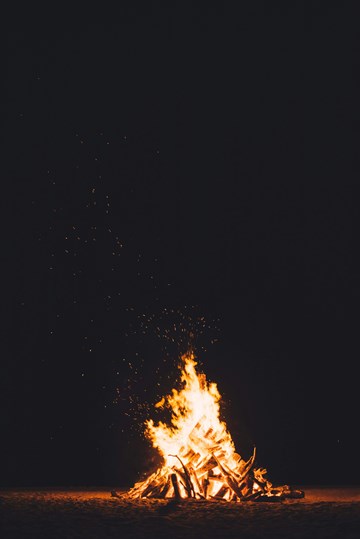
Every year, as a firefighter, I watch the same pattern unfold. Late October into November brings Halloween, Diwali and Bonfire Night in quick succession, and with them come fireworks, candles, bonfires and a sharp rise in calls to the fire service.
This year has been no different. In fact, for London, it has been worse.
The busiest Bonfire Night in a decade
London Fire Brigade's Control Officers took 832 emergency calls on 5 November 2026 – the highest number on Bonfire Night since 2016, and one more than last year.
The celebrations did not stop on the night. With Bonfire Night and Diwali running into the weekend, the Brigade took another 820 calls on Sunday 8 November, 49 of which were firework related and 13 bonfire related.
Over that weekend, two house fires in particular show exactly how quickly a celebration can turn into an emergency:
- Chingford, Saturday night: a firework sparked an accidental fire at a terraced house in Heaton Close. Half of the ground floor and first floor, and part of the roof, were damaged.
- Croydon, Sunday: a candle being used for religious celebrations caused a fire at an end-of-terrace house on Parkfields, damaging part of the first floor.
A dog was also rescued from a burning home on Sunday, and in Southall two people were arrested after allegedly letting off a barrage of fireworks from the pavement.
Thankfully, no injuries were reported in these fires. But it does not always end that way.
A reminder of what is at stake
In November 2023, on the first night of Diwali, a house fire in Hounslow took the lives of a mother and her three young children. London Fire Brigade believes the most probable cause was a firework landing in a plastic recycling bin next to the house and setting light to the rubbish inside. It is still not known where that firework came from.
The family's father has since spoken publicly to warn others that if you use fireworks, you could lose everything.
I want to draw attention to one detail of that tragedy, because it is something I see on almost every building I assess: a bin full of combustible rubbish, sitting right up against the building. It was not the family's firework. It was not their mistake. A stray spark from somewhere else found fuel next to their home.
Why fireworks and candles cause house fires
From 27 years in the Fire Service and around 20 years of assessing buildings, these are the causes I come back to again and again:
- Stray fireworks landing on roofs, in gutters, on balconies or in bins and hedges.
- Bins and rubbish stored against buildings, especially recycling full of cardboard and paper.
- Fireworks set off too close to houses, from gardens that are simply too small.
- Candles and diyas placed near curtains, decorations, or within reach of children and pets, or left burning unattended.
- Bonfires lit too close to fences, sheds and homes, or started with petrol.
- Used fireworks thrown away before they have properly cooled.
None of these are complicated. All of them are preventable.
Fire safety advice for households
Fireworks
- The safest choice is to go to an organised public display. London Fire Brigade asks people not to hold displays at home for exactly this reason.
- If you do use fireworks, buy only from licensed retailers, follow the instructions, and never set them off from a balcony.
- Keep well away from buildings, and never go back to a firework once it has been lit.
- Soak used fireworks in a bucket of water before throwing them away.
- Know the law: fireworks must not be set off after midnight on Bonfire Night, 1am on Diwali, New Year's Eve and Chinese New Year, and 11pm the rest of the year.
Candles and diyas
- Never leave a lit candle or diya unattended, and put them out before you go to bed.
- Place them on a stable, heat-resistant surface, well away from curtains, cards and decorations.
- Keep them out of reach of children and pets.
- Consider LED candles and battery tea lights – they give a lovely effect with none of the fire risk.
Around your home
- Move wheelie bins and recycling away from your house, garage and fences during fireworks season.
- Clear dry leaves and rubbish from gutters, porches and doorways.
- Shut windows and doors on busy firework nights.
- Test your smoke alarms. Make sure you have at least one on every level of your home.
- Agree an escape plan with your family and make sure everyone knows it.
What landlords and businesses need to know
If you are a landlord, managing agent or business owner, fireworks season is a timely reminder of your legal responsibilities.
Under the Regulatory Reform (Fire Safety) Order 2005, the Responsible Person for any non-domestic premises – including the common parts of flats and HMOs – must have a suitable and sufficient fire risk assessment in place, and must act on its findings.
This time of year, I would ask you to look closely at:
- Bin stores and refuse areas. Are bins kept well away from the building, from windows and from escape routes? Are they secured so they cannot be moved against the building or set alight?
- Balconies. Are residents storing combustible items on balconies? Is your tenancy guidance clear that fireworks, barbecues and candles should not be used there?
- External rubbish and fly-tipping. Loose rubbish, pallets and cardboard around a building are fuel waiting for a spark.
- Communal areas and escape routes. Are they clear, with no decorations, candles or stored items?
- Fire detection and alarm systems. Are they tested and maintained, and do residents know what to do if they sound?
- Resident communication. A short, friendly note to tenants about fireworks and candle safety before Diwali and Bonfire Night costs nothing and can prevent a fire.
A good fire risk assessment is not a box-ticking exercise. It is about spotting the simple, everyday hazards – like a bin against a wall – before they become tomorrow's headline.
The bottom line
Fireworks, candles and bonfires are part of how we celebrate, and they should be enjoyed. But London's busiest Bonfire Night in a decade, and the house fires that followed, show how easily things can go wrong.
Go to an organised display if you can. Keep candles attended. Move your bins away from the house. And if you are responsible for a building, make sure your fire risk assessment is up to date.
Need a fire risk assessment?
At Whale Fire, we carry out common-sense, pragmatic fire risk assessments for landlords, managing agents and businesses. We are NSI accredited, listed on the National Fire Risk Assessor Register (NFRAR), and bring over 20 years of experience assessing buildings.
[Contact Whale Fire today to book your fire risk assessment – add your contact link here]
Extinguish the Risk.
Sources (for your reference – remove before publishing if you prefer):
- The Standard – London house fires sparked by Bonfire Night and Diwali celebrations (9 Nov 2026)
- London Fire Brigade – Brigade encourages organised displays after 800 Bonfire Night calls (Nov 2026)
- London Fire Brigade – Brigade urges public not to misuse fireworks (fireworks code and curfew times)
- Hello Rayo / LFB – Father warns of firework dangers after Hounslow house blaze (Oct 2025)