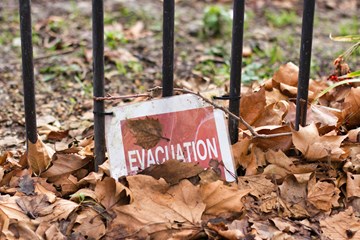
On Saturday evening, London Bridge Underground station was closed while authorities dealt with a fire alert, and people were evacuated from the building at around 5.30pm.
TfL posted on social media that the station was closed while it responded to the alert, and that London Buses would accept passengers’ tickets. Photos showed crowds gathered outside the entrance while TfL staff investigated. The station reopened shortly afterwards.
No fire has been reported and no cause has been given. As incidents go, this one ended well. But it’s worth pausing on, because an evacuation like this is exactly what every building’s fire safety arrangements are meant to make possible.
Why this matters, even with no fire
London Bridge is one of the busiest stations on the TfL network, handling more than 55 million passengers a year on the Northern and Jubilee lines. Getting a building like that cleared quickly, calmly and safely doesn’t happen by luck. It comes from planning, training, working equipment and staff who know exactly what to do when the alarm sounds.
The same applies to your premises, whether you run an office, a shop, a restaurant, a block of flats or a warehouse. The scale is different but the principle is the same: when the alarm goes, can everyone get out safely, and do your people know their role?
In my experience assessing buildings over the last 20 years, the honest answer is often “mostly”. Mostly isn’t good enough.
Five lessons for every responsible person
1. Treat every alarm as real until it’s proven otherwise.
Alarm fatigue is a real danger. If false alarms are common in your building, staff and occupants start ignoring them, and that’s how people get hurt on the day it isn’t a false alarm. Evacuate first and investigate second, every time.
2. Find out why false alarms happen, and fix it.
Repeated false alarms usually point to something fixable: a detector in the wrong place, steam or cooking fumes, dust from building work, poor maintenance or a system that hasn’t been looked at in years. Keep a log of every activation and its cause, and get your system serviced by a competent engineer.
3. Your evacuation plan must fit your building and your people.
A generic plan downloaded from the internet won’t do. Your plan should reflect your actual layout, your occupancy at different times of day and the people who need help, including anyone with a disability or mobility needs. Consider whether they need a Personal Emergency Evacuation Plan (PEEP).
4. Practise it.
Fire drills feel like a nuisance until you need one. Regular drills show you how long evacuation really takes, which exits people actually use, and where the bottlenecks are. They also mean people react on instinct rather than standing around wondering whether to move.
5. Plan for after the evacuation too.
TfL had an answer ready: tickets accepted on buses. What’s yours? Where do people assemble? Who takes the roll call? Who meets the fire service and tells them what they need to know? How do you keep customers and staff informed? Business continuity is part of good fire safety.
Your legal duties
In England and Wales, the Regulatory Reform (Fire Safety) Order 2005 puts the duty on the responsible person, usually the employer, owner, landlord or managing agent. That person must make sure that:
- a suitable and sufficient fire risk assessment is carried out and kept under review
- there are appropriate emergency plans and procedures, including evacuation
- fire detection, warning systems, emergency lighting and escape routes are maintained and kept clear
- staff receive adequate fire safety training
If you can’t say with confidence when your fire risk assessment was last reviewed, or whether it reflects how your building is used today, now is the time to check.
Common sense, not box-ticking
At Whale Fire, we take a common-sense, practical approach to fire safety. We don’t hand you a thick report full of jargon. We give you a clear, practical assessment that tells you what matters, what to fix first and how to keep your people safe. It’s backed by 27 years in the UK Fire Service, where I serve as a Watch Commander.
We carry out fire risk assessments for commercial and residential premises across London and the UK, and we also supply and install fire safety equipment.
Book your fire risk assessment today. Get a free, no-obligation quote.
?? 0800 772 0738 | ?? info@whalefire.co.uk
Want to understand your duties in more detail? Read my guide, The Complete Guide to Fire Risk Assessments & Fire Safety Compliance.
Whale Fire: Extinguish the Risk.
Sources:
- London Bridge Tube station evacuated and closed over fire alert (Yahoo News UK)
- London Bridge station evacuated over fire alert (AOL)
- Fire alert forces closure of major London Tube station (inkl)