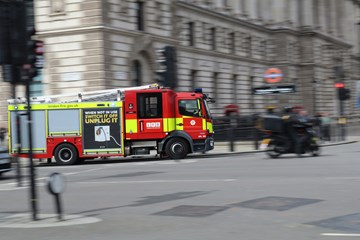
Scroll through the London Fire Brigade's incident log on any given week and you'll see the same phrase again and again: fire at commercial property. Warehouses, shops, offices, restaurants, storage units and buildings under renovation. Some are small and quickly dealt with. Others need ten or more fire engines and close businesses for months.
For anyone responsible for a commercial building in the capital, these fires are a reminder that the risk is real, local and ongoing. This article looks at why London's commercial premises are so exposed, what has been happening in 2026, and what you need to do to protect your people, your building and your business.
Commercial fires in London: 2026 so far
A handful of this year's incidents shows the range of premises affected:
- Kensington High Street, January: twelve fire engines and around 80 firefighters tackled a fire at a commercial building on one of London's busiest shopping streets.
- Park Royal, March: an electrical unit at a commercial building caught fire. The Brigade believes it was accidental and caused by an electrical fault.
- Islington, March: a commercial building under renovation on Dufferin Street caught fire. One man was taken to hospital, and firefighters had to remove and cool a gas cylinder from the entrance because cylinders can explode when heated.
- Kensington, May: ten fire engines and around 70 firefighters attended a fire at a storage facility on Blythe Road.
- Walthamstow, May: a fire broke out in a terraced shop with homes above it on the High Street.
- Wembley, September: around 70 firefighters were called to a warehouse on Alperton Lane after part of the ground floor caught fire, with 13 calls made to the Brigade.
These are not unusual. They are a normal few months in a city of nearly nine million people and hundreds of thousands of businesses.
Why London's commercial buildings are at higher risk
After more than 25 years in the fire service, I've seen how London's buildings create risks you rarely find elsewhere.
1. Mixed-use buildings. Thousands of London shops, takeaways and offices have flats above them. A fire that starts in a shop at 5am can trap people asleep upstairs. Fire separation between the commercial unit and the homes above is often poor in older buildings, and it is one of the most common problems I find.
2. Old buildings with hidden voids. Victorian and Edwardian buildings have floor voids, ceiling spaces and service risers where fire can travel unseen. Decades of alterations, new cables and pipework often leave gaps in fire stopping that nobody has checked.
3. Buildings under renovation. Works sites bring hot works, gas cylinders, temporary electrics, stored materials and fire doors propped open. The Islington fire this year is a clear example.
4. Electrical faults. Overloaded sockets, ageing distribution boards, poorly maintained equipment and extension leads daisy-chained under desks remain one of the most common causes of commercial fires.
5. Lithium-ion batteries. The London Fire Brigade has said lithium batteries remain one of the fastest-growing fire risks in the capital, and 2025 saw a record number of e-bike and e-scooter fires in London. Delivery riders charging in back rooms, staff charging e-bikes at work and stock rooms full of battery-powered products all add to the risk.
6. Kitchens and food businesses. Restaurants and takeaways combine high heat, cooking oil and grease-laden extraction ducts. Poorly cleaned ducts can carry a fire through a building very quickly.
7. Storage and warehouses. Large amounts of packaging, stock and pallets give a fire plenty of fuel. Once a warehouse fire takes hold, it can need dozens of firefighters and burn for hours.
8. Arson and rubbish. Bins and waste stored against buildings, in alleys or under stairs are an easy target and a common way for fires to start out of hours.
Your fire alarm may not bring a fire engine
This is the change many London business owners still don't know about.
Since late 2024, the London Fire Brigade no longer attends automatic fire alarms in most commercial premises between 07:00 and 20:30 unless someone also calls 999 to report an actual fire. The Brigade made the change because around 99% of automatic alarm calls from non-residential buildings turn out to be false alarms.
Certain premises are exempt and still get a full response, including hospitals, care homes, hotels, blocks of flats, HMOs, schools, nurseries and heritage buildings. But for most offices, shops, warehouses and workplaces, the rule applies.
What this means in practice:
- Your fire alarm is not a direct line to the fire brigade during the day.
- Your staff must know to check the alarm, evacuate, and call 999 if there is a fire.
- If your alarm system is linked to a monitoring centre, check what it now does when an alarm goes off.
- Your fire risk assessment and emergency plan should be updated to reflect this.
If your evacuation plan still assumes "the alarm will call the fire brigade", it needs reviewing now.
The law: your duties as the responsible person
Under the Regulatory Reform (Fire Safety) Order 2005, the "responsible person" for a commercial building, usually the employer, owner or the person in control of the premises, must:
- Carry out a suitable and sufficient fire risk assessment, and review it regularly
- Put in place the fire safety measures it identifies
- Keep escape routes and fire exits clear and available
- Provide suitable fire detection, warning and firefighting equipment, and keep it maintained
- Have an emergency plan and give staff fire safety information and training
- Cooperate and coordinate with other responsible persons in shared or mixed-use buildings
Since the Building Safety Act 2022 changes came into force in October 2023, every fire risk assessment must be recorded in writing in full, whatever the size of your business, along with the name of the person who carried it out.
The consequences of getting it wrong are serious. The London Fire Brigade can issue enforcement and prohibition notices, and a conviction can lead to an unlimited fine and up to two years in prison. But the real cost of a fire is usually far greater: lost stock, closed premises, insurance problems, lost customers, and at worst, lives lost.
How to reduce the risk in your premises
Here are the practical steps I'd recommend for any London business:
- Get a professional fire risk assessment, and review it at least once a year or after any change to the building, layout, staff or use.
- Check fire separation, especially between commercial units and flats above, and around service penetrations.
- Maintain your electrics. Arrange regular electrical inspection and testing, and remove daisy-chained extension leads.
- Control lithium-ion battery charging. Set clear rules on where e-bikes, e-scooters and batteries can be charged and stored, and never on an escape route.
- Manage contractors and hot works with a permit system, and make sure gas cylinders are stored safely.
- Clean kitchen extraction systems regularly if you run a food business.
- Keep waste and rubbish away from the building and secure bins out of hours.
- Test your fire alarm weekly, and train your staff on what to do, including calling 999.
- Keep fire doors shut and in good repair, and never wedge them open.
- Keep escape routes clear of stock, deliveries and storage.
How Whale Fire can help
Whale Fire provides fire risk assessments for commercial premises across London and nationally, from offices and shops to warehouses, hotels and mixed-use buildings. Our assessments are led by front-line fire service experience: we understand how fires start, how they spread through London's buildings, and what the London Fire Brigade looks for when it inspects.
Every assessment includes:
- A full written report that meets current legal requirements
- A clear, prioritised action plan you can act on straight away
- Practical advice that takes your costs, logistics and timescales into account
- No tie-in contracts
Extinguish the Risk. Call us on 0800 772 0738 or contact Whale Fire to book your fire risk assessment today.
Frequently asked questions
Does my London business legally need a fire risk assessment? Yes. Almost every non-domestic premises in England is covered by the Regulatory Reform (Fire Safety) Order 2005, and the assessment must now be recorded in writing.
Will the London Fire Brigade come if my fire alarm goes off? In most commercial premises, not between 07:00 and 20:30 unless someone calls 999 to confirm a fire. Hospitals, care homes, hotels, flats, HMOs, schools and some other premises are exempt.
How often should a commercial fire risk assessment be reviewed? Regularly, and in practice at least once a year, plus whenever there is a significant change such as building works, a new layout or a change of use.
What is the most common cause of commercial fires? Electrical faults, cooking, arson and poorly managed waste are common causes, and lithium-ion batteries are a fast-growing risk.
Who is responsible for fire safety in a shop with flats above? There may be more than one responsible person, such as the shop operator and the building owner or freeholder. The law requires them to cooperate and coordinate, and the fire risk assessment should cover how fire is kept apart from the homes above. Contact Us - Whale Fire
Sources
- London Fire Brigade: Incidents
- London Fire Brigade: Fire at commercial building, Islington (March 2026)
- London Fire Brigade: Fire at commercial property, Park Royal (March 2026)
- RSOE EDIS: Wembley warehouse fire (September 2026)
- London Fire Brigade: Automatic fire alarm policy
- Aviva: New London Fire Brigade policy on automatic fire alarms
- International Fire & Safety Journal: LFB Commissioner sets 2026 priorities