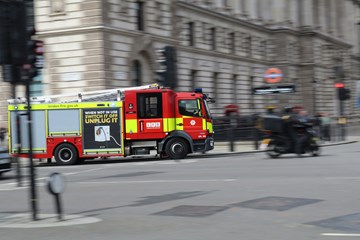
London is one of the most complex fire safety environments in the country. Shops with flats above them, converted Victorian houses split into HMOs, mixed-use office blocks, hotels, restaurants and thousands of high-rise residential buildings all sit side by side. According to London Fire Brigade, around 800,000 premises across the capital fall under fire safety law.
If you own, manage or run any of them, you almost certainly need a fire risk assessment – and the rules have changed significantly over the past few years. This guide explains what the law requires in London in 2026, who is responsible, and what has changed recently.
Which law applies in London?
The main piece of legislation is the Regulatory Reform (Fire Safety) Order 2005, usually called the Fire Safety Order. It applies to virtually all non-domestic premises in England and Wales, and to the common parts of residential buildings such as flats and HMOs.
London has no separate fire safety law of its own. What makes London different is the scale and density of its buildings, and the fact that the Order is enforced in the capital by the London Fire Commissioner, through London Fire Brigade's fire safety inspectors.
The Order has been strengthened several times since the Grenfell Tower fire, most notably by:
- the Fire Safety Act 2021
- the Fire Safety (England) Regulations 2022
- section 156 of the Building Safety Act 2022
- the Fire Safety (Residential Evacuation Plans) (England) Regulations 2025, which came into force on 6 April 2026
Do I need a fire risk assessment?
In short, yes, if you are responsible for any of the following in London:
- shops, offices, warehouses and factories
- pubs, bars, restaurants and takeaways
- hotels, hostels, B&Bs and short-term lets used commercially
- schools, nurseries, places of worship and community halls
- care homes and supported housing
- the common parts of blocks of flats – corridors, stairwells, lobbies, bin stores and plant rooms
- houses in multiple occupation (HMOs)
The law places the duty on the Responsible Person. That is usually the employer, the owner, the landlord, the freeholder or the managing agent – whoever has control of the premises. In many London buildings there is more than one Responsible Person (for example, a freeholder controlling the common parts and a business tenant controlling a shop on the ground floor). Where that happens, they are legally required to cooperate and share information with each other.
What the law now requires
1. The assessment must be written down – for everyone
Before October 2023, a business only had to record its fire risk assessment in writing if it had five or more employees, held a licence, or had been issued an alterations notice. That exemption no longer exists. Since 1 October 2023, every Responsible Person must record the full assessment in writing, regardless of the size of the business.
You must also record your fire safety arrangements – how you plan, organise, control, monitor and review the measures you have in place – and, if you appoint someone to carry out or review the assessment, record their name and, where relevant, their organisation.
2. The assessment must cover the building's structure, external walls and flat front doors
For residential buildings with two or more sets of domestic premises, the Fire Safety Act 2021 confirmed that the assessment must consider the building's structure, its external walls (including cladding, balconies and windows) and the entrance doors to individual flats. This applies to buildings of any height, not just tower blocks – an important point for the many low and medium-rise blocks across London.
3. Extra duties for taller residential buildings
Under the Fire Safety (England) Regulations 2022:
- All blocks of flats with common parts must display fire safety instructions for residents and give them information about the importance of fire doors.
- Buildings over 11 metres must also have regular checks of communal fire doors and best-endeavours annual checks of flat entrance doors.
- High-rise buildings (18 metres or seven storeys and above) have further duties, including providing building plans and external wall information to London Fire Brigade, installing a secure information box, adding wayfinding signage, and carrying out monthly checks of firefighting lifts and equipment.
High-rise residential buildings are also subject to the separate building safety regime under the Building Safety Act, including registration and safety case requirements. That regime sits alongside the Fire Safety Order; it does not replace the need for a fire risk assessment.
4. New evacuation planning duties from April 2026
From 6 April 2026, Responsible Persons for residential buildings that are 18 metres or seven storeys or taller, or over 11 metres with a simultaneous evacuation strategy, have new duties to plan for residents who may need help to escape. In outline, they must:
- use reasonable endeavours to identify residents who may struggle to evacuate without assistance
- offer those residents a person-centred fire risk assessment and, where the resident agrees, an emergency evacuation statement
- prepare and maintain a building-wide emergency evacuation plan
- review the arrangements regularly
All of this is voluntary for the resident, and depends on their consent. London Fire Brigade publicly urged Londoners and building owners to prepare for these changes ahead of the April start date.
Who can carry out a fire risk assessment?
The law says the assessment must be “suitable and sufficient” and carried out by a competent person – someone with enough training, experience and knowledge to do the job properly for that type of building.
At the moment there is no single licence that a fire risk assessor must legally hold. That is changing. The Grenfell Tower Inquiry recommended a mandatory accreditation system for fire risk assessors, the government accepted it in full, and in March 2026 it launched a consultation on mandatory certification for assessors in England, which closed in June. A new British Standard for assessor competence, BS 8674:2025, has also been published.
Until the new rules arrive, the safest approach is to choose an assessor who:
- is listed on a recognised register or third-party certification scheme
- has experience with your type of building – a care home, HMO or high-rise block needs a very different level of expertise from a small office
- carries professional indemnity insurance
- will give you a clear, prioritised action plan, not just a checklist
How often should a fire risk assessment be reviewed?
The law does not set a fixed review date. It requires the assessment to be reviewed regularly and whenever there is reason to believe it is no longer valid. In practice, you should review it:
- after any building works, refurbishment or change of layout
- when the use of the premises changes, or occupancy increases
- after a fire or near miss
- when new legislation comes into force
- at least annually for higher-risk premises such as HMOs, care homes, hotels and blocks of flats
How London Fire Brigade enforces the law
London Fire Brigade inspects premises through routine audits, after fires, and in response to complaints. Where it finds problems, it can issue:
- alterations notices, requiring you to tell the Brigade before making changes to higher-risk premises
- enforcement notices, setting out what must be fixed and by when
- prohibition notices, restricting or stopping the use of all or part of a building immediately
The Brigade publishes the enforcement and prohibition notices it serves on a public register on its website, searchable by borough. In other words, a notice is not only a legal problem but a reputational one. The Brigade has said that over a five-year period it issued more than 200 prohibition notices, most of them to protect people living in unsuitable accommodation.
Serious breaches can lead to prosecution, with unlimited fines and, in the most serious cases, imprisonment.
London-specific risks to watch for
Every building is different, but in London a good fire risk assessment will often need to look closely at:
- Flats above shops and commercial premises, where a fire in the business can cut off the only escape route for residents.
- HMOs and converted houses, where poor fire separation, missing fire doors and inadequate alarms are common.
- E-bikes and e-scooters. London Fire Brigade recorded a record number of lithium-ion battery fires from e-bikes and e-scooters in 2025. Charging and storage in hallways, stairwells and bin stores should be considered as part of your assessment.
- Mixed-use and multi-tenanted buildings, where several Responsible Persons need to coordinate.
- Short-term and holiday lets, which are treated as non-domestic premises under the Order when let commercially.
Quick checklist for London Responsible Persons
- Identify who the Responsible Person is for each part of your building.
- Make sure you have a current, written fire risk assessment.
- Check that it covers the structure, external walls and flat entrance doors if it is a residential building.
- Confirm whether the 2022 Regulations or the 2026 evacuation planning duties apply to your building.
- Use a competent, ideally third-party certified, fire risk assessor.
- Work through the action plan, and record what has been done.
- Review the assessment regularly and after any significant change.
How Whale Fire can help
Whale Fire carries out professional fire risk assessments and provides practical fire safety solutions for businesses, landlords and managing agents. If you are unsure whether your London premises meet current requirements – or you have received a letter or notice from London Fire Brigade – get in touch for clear, practical advice.
This article is general guidance and does not constitute legal advice. Requirements depend on the type, size and use of your premises. Contact Us - Whale Fire
SEO details (for WordPress – not for publication)
- SEO title: Fire Risk Assessment Requirements in London (2026 Guide)
- Meta description: What the law requires for fire risk assessments in London in 2026: who needs one, recent changes, assessor competence and how LFB enforces the rules.
- Suggested slug: /fire-risk-assessment-requirements-london/
- Focus keyphrase: fire risk assessment London
- Suggested tags: fire risk assessment, London, Fire Safety Order, responsible person, London Fire Brigade, RPEEPs