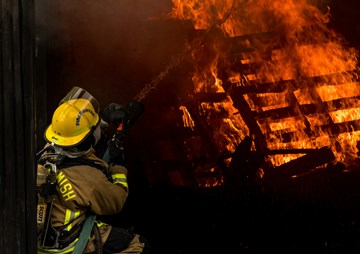
On Saturday evening, three men lost their lives following a fire at a single-storey pavilion on New Zealand Way in White City, west London, close to Queens Park Rangers' Loftus Road stadium. London Fire Brigade received the first of 19 emergency calls at 6.52pm, and mobilised crews from North Kensington, Acton, Chiswick and surrounding stations. Despite the efforts of firefighters, who rescued three men from the building, two were pronounced dead at the scene and a third died later in hospital. Over half of the structure was damaged by the fire, which was brought under control by 9.25pm.
The cause remains under investigation by the Brigade's specialist fire investigation officers and the Metropolitan Police, so it would be wrong to speculate on what went wrong. But as a fire risk assessor with over 26 years in the UK Fire Service, incidents like this are a sobering reminder of how quickly a fire in a relatively small, single-storey building can turn fatal, and why proper fire safety management in non-domestic premises is never something to put off.
Pavilions, Clubhouses and Community Buildings Are Often Overlooked
Sports pavilions, clubhouses and similar community buildings often fall into a grey area when it comes to fire safety. They're not large enough to feel like a "serious" fire risk in the way an office block or hotel might, they're frequently used by volunteers rather than professional facilities staff, and they can go years without anyone formally reviewing how a fire would be detected, contained or escaped from.
That's exactly the kind of building where a fire risk assessment earns its keep. A single-storey structure with limited compartmentation can allow fire to spread through more than half the building before crews even arrive, as happened in White City. The questions a proper assessment forces you to confront are straightforward but easily neglected:
- Are smoke alarms and detection systems fitted, tested, and adequate for the size and use of the building?
- Are escape routes kept clear, well-signed, and wide enough for the number of people who might be inside?
- Is there a means of raising the alarm quickly, and do the people using the building know what to do if it sounds?
- Are electrical installations, heating sources, and any stored materials properly managed and inspected?
- Has the risk to anyone with mobility issues or disabilities been specifically considered?
Fire Risk Assessments Are a Legal Duty, Not an Optional Extra
Under the Regulatory Reform (Fire Safety) Order 2005, anyone responsible for non-domestic premises in England and Wales has a legal duty to carry out a suitable and sufficient fire risk assessment, and to keep it under regular review. This applies whether you run an office, a hotel, a block of flats, a sports club, or a small community pavilion. Following the Grenfell Tower Inquiry, scrutiny of fire safety compliance — particularly around shared and communal buildings — has only increased, and enforcement action against those who fail to meet their obligations has become more rigorous.
A fire risk assessment isn't a box-ticking exercise. Done properly, it identifies the specific hazards present in your building, the people most at risk, and the practical steps needed to reduce that risk to an acceptable level — backed up by an action plan with realistic timescales. It should be revisited whenever the building's use changes, after any significant incident, or at sensible regular intervals regardless.
Don't Wait for an Incident to Find Out What You've Missed
Incidents like White City are rare, but they happen often enough to demonstrate exactly what's at stake when fire safety isn't given the attention it deserves. Whether you manage a sports club, a block of flats, a hotel, or a commercial premises anywhere in the capital, a professional fire risk assessment is the clearest way to understand your current position and close any gaps before they become a real emergency.
At Whale Fire, we carry out London Fire Risk Assessments for landlords, businesses, sports clubs and community organisations across the capital, drawing on direct operational fire service experience rather than a generic checklist approach. If it's been a while since your premises were properly assessed — or you've never had one carried out at all — now is a sensible time to put that right.
Get in touch with Whale Fire today to arrange a fire risk assessment for your premises. Contact Us - Whale Fire