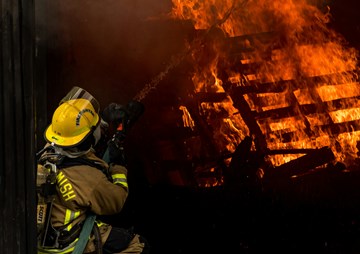
Summer arrives and out come the barbecues. It's one of the great British traditions — the moment the sun shows itself, half the country is reaching for the charcoal and lighter fluid. And there's absolutely nothing wrong with that.
But fire is fire, and warm dry weather creates conditions where things go wrong faster than people expect. As fire safety professionals, we see the consequences of that every year.
Here's what you need to know before you light up this summer.
The Numbers Tell the Story
This isn't scaremongering. The data on BBQ-related fire incidents in the UK is stark.
Over 700 BBQ-related incidents were recorded by fire and rescue services across the UK between 2022 and 2024 alone — and that's just the fires. In the same three-year period, emergency services responded to nearly 6,500 BBQ-related incidents in total, including 309 hospital admissions for barbecue injuries and 160 ambulance call outs.
South Yorkshire Fire and Rescue attended 155 call outs in that period. West Yorkshire recorded 115. The West Midlands logged 86. These aren't freak events — they're a pattern.
And that's before you factor in the wider wildfire picture. 2025 was the UK's worst year for wildfires on record, with over 47,000 hectares burned — more than double the previous annual record. BBQs and disposable barbecues are a known cause of grass fires, particularly during long dry spells when ground vegetation becomes essentially tinder.
Why Heat Makes Everything More Dangerous
Most people understand that a BBQ involves fire. What they underestimate is how dramatically dry, hot conditions change the risk profile.
When grass, soil and vegetation are dry, they ignite and spread fire at a speed that catches people completely off guard. A spark from a BBQ that lands on damp grass in October goes out. The same spark landing on parched lawn in July can be a running fire within seconds.
This is why fire services consistently issue warnings during heatwaves and dry spells. The BBQ itself may be perfectly set up — but the environment around it has become a hazard.
The Most Common Mistakes
After years in the fire service, the same errors come up time and again. These are the ones that lead to callouts.
Positioning the BBQ badly
A barbecue placed too close to a fence, garden shed, or overhanging tree is an accident waiting to happen. Heat, sparks and embers travel. What feels like a safe distance often isn't. The BBQ should be on level, non-combustible ground — not decking — and kept well clear of any structures, fencing or vegetation.
Using accelerants
Petrol, paraffin, white spirit — people reach for whatever is available to get the coals going faster. This is genuinely dangerous. Accelerants can cause sudden, explosive flare-ups that cause serious burns or ignite surrounding materials before anyone can react. Use proper firelighters and allow time for the coals to establish.
Leaving it unattended
This is perhaps the most common single cause of BBQ fires escalating. Someone goes inside to get a drink, answer the phone, attend to a child — and comes back to find the fire has spread. A BBQ must be supervised the entire time it is lit. No exceptions.
Alcohol and fire
The two are a popular combination. They're also a dangerous one. Impaired judgement and slower reactions are a bad match for an open fire. If you're the one running the BBQ, go easy until the cooking is done and the fire is out.
Not extinguishing it properly
"Leaving it to burn out" is not a safe way to end a barbecue session. Coals and ash retain significant heat for many hours after the visible flames are gone — long enough to start a fire if knocked over, long enough to emit carbon monoxide in an enclosed or semi-enclosed space, and long enough to cause serious burns to a child or pet that wanders too close.
Ash should never go into wheelie bins or plastic dustbins while still warm. It can melt the plastic and start a fire. Empty ash onto bare garden soil only, and only when you are confident it has fully cooled.
Disposable BBQs
These deserve a category of their own. Disposable BBQs are one of the most misused fire products on the market. They retain heat for hours after use, they're frequently discarded into bins while still hot, and they are one of the leading causes of grass fires in parks and open spaces.
Many local councils and London's parks have now banned them outright. For good reason. If you're heading to a park or public space this summer, leave the disposable at home.
Gas BBQs: A Different Set of Risks
Charcoal gets most of the attention but gas BBQs carry their own specific risks.
A gas leak, even a small one, can allow flammable gas to accumulate before the burner is lit. Before using a gas BBQ, check the cylinder and pipework connections. The simple way to test for a leak is to brush soapy water around the joints and look for bubbles. If you see them, tighten the connection — but don't overtighten. Never use a naked flame to check for a gas leak.
When you're done cooking, turn off the gas cylinder first, before switching off the controls. This clears residual gas from the pipes rather than leaving it sitting in the system.
If you smell gas, don't ignite the BBQ. Move people away from the area, shut off the cylinder if it's safe to do so, and allow any gas to disperse before investigating.
Fire Pits and Chimineas
The popularity of fire pits and chimineas has grown significantly in recent years. They extend time spent outdoors into the evening and autumn months and, when used correctly, are relatively low risk.
When used incorrectly, they present many of the same problems as BBQs — plus a few additional ones.
Siting matters just as much as with a BBQ. A fire pit should never be used close to structures, overhanging branches, garden furniture, or anything combustible. The radiant heat from a fire pit extends well beyond the visible flame.
Sparks and embers from open fire pits can travel a considerable distance in even a light breeze. Be particularly cautious on windy evenings.
Never burn treated wood, MDF, painted timber, or garden waste in a fire pit or chiminea. These produce toxic fumes and significantly increase the risk of an uncontrollable fire.
Supervision and extinguishing — the same rules apply as with any outdoor fire. Never leave it unattended. Have water or a fire blanket available. Ensure it is fully extinguished before going to bed.
What to Do If a Garden Fire Gets Out of Control
Even with every precaution taken, things can go wrong. Knowing what to do in those first seconds matters.
Call 999 immediately if a fire is spreading and you cannot control it. Don't waste time trying to fight a spreading fire with a garden hose — get people away from the area and get the fire service on the way.
A small, contained flare-up — a BBQ that has suddenly caught, for example — can be managed with a bucket of water or sand kept nearby for exactly this purpose. Never use water on a fat or oil fire, as this can cause a violent steam explosion.
Garden hoses are useful for damping down the area around a fire to slow spread, but should not be relied upon to extinguish a significant fire.
Never re-enter a building if fire has spread to structures. The priority is getting everyone out and away, then calling 999.
A Word on Dry Weather and Bonfires
Garden bonfires and outdoor fires in dry conditions are high-risk. During a prolonged dry spell, the ground itself can ignite — not just the surface vegetation. Fires can spread underground through dry root systems and re-emerge elsewhere unexpectedly.
If there has been an extended period without rain, reconsider whether a bonfire is appropriate at all. Check whether your local fire service has issued any warnings. Many services ask the public to avoid garden fires entirely during high-risk periods. This isn't excessive caution — it's a genuine reflection of how quickly fires can get away from people in dry conditions.
The Simple Version
If you take nothing else from this article, take these:
- Position your BBQ away from fences, sheds, decking and trees
- Never use accelerants to start a fire
- Never leave a lit BBQ unattended
- Keep children and pets at a safe distance
- Extinguish properly — ash stays hot for hours
- Don't put warm ash in a wheelie bin or plastic bin
- Keep a bucket of water or sand nearby at all times
- In dry weather, the risk around every outdoor fire increases significantly
Summer should be enjoyed. A little awareness and a few sensible habits mean you can get the most out of it without calling the fire service.
If you have any concerns about fire safety at your property — domestic or commercial — Whale Fire offers professional fire risk assessments and fire safety advice. Get in touch to find out how we can help.