The Málaga Wake-Up Call
In the early hours of Monday 25 May 2026, emergency services received calls reporting a fire at the Ibis Centro hotel in central Málaga, Spain. Flames had broken out in Le Grand Café on the ground floor and spread rapidly upward through the building. Over 100 guests were evacuated in the middle of the night as thick smoke filled the corridors. What followed was a 17-hour battle for firefighters, with the blaze reigniting in the afternoon and ultimately gutting approximately 70% of the building — leaving it at risk of total structural collapse.
Thankfully, no guests or staff lost their lives. But the incident raises urgent questions that every hotel owner and manager in the UK — and beyond — must ask themselves: Is our building truly prepared? And do we have a fire risk assessment that is genuinely fit for purpose?
The Legal Duty: The Regulatory Reform (Fire Safety) Order 2005
In England and Wales, hotels are subject to the Regulatory Reform (Fire Safety) Order 2005 (RRO). Under this legislation, the Responsible Person — typically the owner, employer, or managing agent — has a legal duty to:
- Carry out a suitable and sufficient fire risk assessment
- Implement and maintain appropriate fire safety measures
- Ensure a fire emergency plan is in place
- Review the assessment regularly, and whenever significant changes occur
Failure to comply is a criminal offence. But beyond the legal obligation, the moral case is simple: guests sleep in your building, often in unfamiliar surroundings, trusting you to keep them safe.
What Makes a Fire Risk Assessment "Suitable and Sufficient"?
A fire risk assessment is not a tick-box exercise or a generic template downloaded from the internet. For a hotel, it must be a thorough, site-specific document that reflects the real risks within your premises. A competent assessor will examine:
1. Ignition Sources and Fire Hazards
Every potential source of ignition must be identified — kitchens, laundries, electrical plant rooms, bar and restaurant areas, guest smoking areas, and maintenance workshops. In the Málaga fire, the blaze started in a ground-floor café, a reminder that food and beverage areas carry significant fire load that must be carefully managed.
2. Building Construction and Fire Spread
The Málaga fire spread with alarming speed, with firefighters reporting that the building's construction — including iron beams, timber elements and acoustic insulation materials — actively accelerated the flames and created hidden pockets of fire within walls and ceilings. Your fire risk assessment must examine how your building is constructed, identify materials that could contribute to rapid fire spread, and ensure that appropriate compartmentation is maintained and not compromised by poorly managed refurbishments or building works.
3. Means of Escape
Hotels present unique life safety challenges. Guests are:
- Sleeping when a fire may break out
- Unfamiliar with the layout
- Potentially intoxicated
- May have mobility impairments or other vulnerabilities
Your assessment must ensure that escape routes are adequate in number, clearly signed, free from obstruction at all times, and appropriately lit — including emergency lighting that functions on power failure. Personal Emergency Evacuation Plans (PEEPs) must be considered for guests or staff with mobility or sensory impairments.
4. Fire Detection and Warning Systems
Early detection is critical in hotels. A suitable automatic fire detection and alarm system — appropriately designed for the size and layout of your premises — can mean the difference between a successful evacuation and a tragedy. The assessment should ensure the system is correctly categorised, regularly tested, and that staff know how to respond when it activates.
5. Firefighting Equipment and Suppression Systems
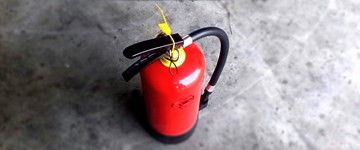
First-response firefighting equipment, including fire extinguishers and hose reels, must be correctly sited, maintained, and understood by staff. Larger hotels should consider whether an automatic suppression system (sprinklers) is appropriate or required. Had suppression systems been present in Málaga, the outcome for the building — and potentially for life safety — could have been very different.
6. Emergency Procedures and Staff Training
A fire risk assessment is only as good as the people who implement it. Hotel staff work shifts, and many may be agency or seasonal workers unfamiliar with the property. Your assessment must consider:
- A documented fire emergency plan
- Regular fire drills (at least annually, ideally more frequently)
- Staff training in evacuation procedures, the use of first-aid firefighting equipment, and the operation of the fire alarm panel
- Clear roles and responsibilities during an emergency — including who calls the fire service, who sweeps corridors, and who manages the assembly point
7. Review and Revision
A fire risk assessment is a living document. It must be reviewed regularly and whenever there is:
- A change in the use of the premises or any part of it
- A significant refurbishment or change to the building structure
- A change in the number of guests or staff
- A near-miss or fire incident
- A change in legislation or guidance
Don't Forget: Hotels Are Occupied Around the Clock
Unlike offices or retail premises, hotels are occupied 24 hours a day, every day of the year. This places additional demands on fire safety management. Night-time staffing levels are typically reduced, yet the risk of a fire going undetected while guests sleep is at its highest. Your assessment must reflect this reality, and your procedures must be robust enough to function effectively at 2am as well as 2pm.
The Consequences of Getting It Wrong
The Málaga Ibis fire is, fortunately, not a story of fatalities. But history shows us how quickly hotel fires can become catastrophic when fire safety measures are inadequate. The 2025 Kartalkaya ski hotel fire in Turkey claimed dozens of lives — a tragedy that investigators attributed in part to the absence of working smoke detectors, automatic sprinklers, functioning fire alarms, and emergency exit lighting. Guests were left navigating smoke-filled corridors in complete darkness.
These are not distant, isolated events. They are reminders of what can happen when fire safety is treated as an afterthought.
Instructing a Competent Fire Risk Assessor
The RRO requires that where a Responsible Person does not have the competence to carry out a fire risk assessment themselves, they must appoint a competent person to do so. In a hotel setting, this almost always means engaging a qualified, experienced fire risk assessor.
When selecting an assessor, look for:
- Membership of a recognised body such as the Institute of Fire Safety Managers (IFSM) or IFE (Institution of Fire Engineers)
- Demonstrated experience with sleeping risk premises
- A clear, detailed report — not a brief generic form
- A willingness to engage with you on the findings and recommended actions
Summary: Your Fire Safety Checklist
? A current, site-specific fire risk assessment carried out by a competent person
? All significant findings actioned and documented
? Appropriate fire detection and alarm system — tested regularly
? Escape routes clear, signed, and lit at all times
? Staff trained and fire drills completed
? Fire emergency plan documented and communicated
? PEEPs in place for vulnerable guests and staff
? Suppression and firefighting equipment maintained
? Assessment reviewed regularly and after any significant change
Final Thought
The guests who checked into the Ibis Centro in Málaga that Sunday evening had no idea that by 1:30am they would be evacuating into the street in the middle of the night. Your guests have no idea either. But as the Responsible Person for your premises, you have both the legal duty and the moral responsibility to ensure that if the worst happens, everything that could have been done to protect them has been done.
A suitable and sufficient fire risk assessment is not a cost — it is an investment in the safety of every person who walks through your door.
If you would like advice on commissioning a fire risk assessment for your hotel or hospitality premises, or if you have concerns about your current fire safety arrangements, please contact us for expert guidance Contact Us - Whale Fire