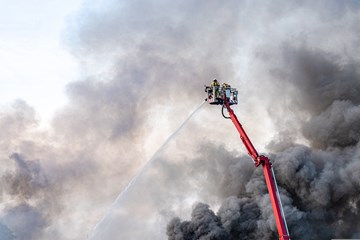
The Importance of Compartmentation in Buildings: A Fire Safety Essential
Fire safety is built on many layers of protection, but few are as fundamentally important — or as frequently overlooked — as compartmentation. Whether you manage a residential block, a commercial premises, or a multi-use development, understanding compartmentation could be the difference between a contained incident and a catastrophic loss of life.
What Is Compartmentation?
Compartmentation is the division of a building into separate fire-resistant sections, or "compartments," using walls, floors, ceilings, and doors that are specifically designed to resist the passage of fire and smoke for a defined period of time. These barriers are constructed and maintained to meet strict fire resistance ratings, typically ranging from 30 minutes to several hours, depending on the building type and use.
The principle is simple: if a fire breaks out in one area, compartmentation contains it there — buying vital time for occupants to evacuate safely and for firefighters to bring the blaze under control before it spreads throughout the structure.
Why Compartmentation Matters
1. Protecting Lives
The primary purpose of compartmentation is life safety. Smoke inhalation is the leading cause of fire-related deaths, and the rapid spread of smoke through a building without compartmentation can prove fatal within minutes. Effective fire compartments create protected escape routes — corridors, stairwells, and lobbies — that allow occupants to evacuate without being overwhelmed by smoke and toxic gases.
2. Limiting Fire Spread
An uncontrolled fire can double in size every minute. Without compartmentation, a fire starting in a basement storeroom or a kitchen on the third floor can rapidly engulf an entire building. Fire-resistant compartments act as a physical barrier, slowing — and often stopping — the spread of flames and heat to other areas of the structure.
3. Supporting Firefighting Operations
When firefighters arrive at a scene, compartmentation gives them a clearer picture of where the fire is and a safer environment in which to operate. Contained fires are easier and safer to tackle than those that have spread through multiple floors and sections. Compartmentation is therefore not just a passive measure — it actively supports emergency response.
4. Reducing Property Damage
Beyond the human cost, fire damage is enormously expensive. Effective compartmentation can limit destruction to a single zone of a building, protecting the rest of the structure, its contents, and the livelihoods that depend on it. For businesses and landlords, this can be the difference between a temporary closure and a total loss.
5. Legal and Regulatory Compliance
In the UK, compartmentation requirements are set out in statutory guidance including Approved Document B (Fire Safety) of the Building Regulations, as well as the Regulatory Reform (Fire Safety) Order 2005. Building owners and responsible persons have a legal duty to ensure that compartmentation is correctly installed and maintained. Failure to comply can result in enforcement action, prohibition notices, and in serious cases, criminal prosecution.
Common Threats to Compartmentation Integrity
Even the best-designed compartmentation can be compromised over time. Common breaches include:
- Service penetrations — Pipes, cables, and ducts passing through fire-resistant walls or floors create gaps that must be sealed with approved intumescent materials. These are frequently left unsealed during building works.
- Damaged or missing fire doors — Fire doors are a critical component of any compartmentation strategy. Propped-open doors, damaged seals, or missing cold smoke strips can render them useless in an emergency.
- Alterations and renovations — Refurbishments often involve cutting through compartment walls without adequate reinstatement of fire stopping, unknowingly creating pathways for fire and smoke.
- Poor maintenance — Intumescent seals, fire door closers, and cavity barriers all require regular inspection and upkeep to function as intended.
The Role of Fire Compartmentation Surveys
A professional fire compartmentation survey is the most reliable way to identify breaches and weaknesses in a building's passive fire protection. Carried out by a qualified specialist, these surveys examine fire doors, walls, floors, ceiling voids, and service penetrations throughout a building, providing a detailed report of findings and recommended remedial action.
For building owners and managers, a compartmentation survey is not just best practice — in many cases it is a legal requirement under the fire risk assessment process.
Conclusion
Compartmentation is one of the most powerful tools we have in fire safety. It is silent, passive, and — when properly installed and maintained — remarkably effective. But it only works when it is taken seriously: designed correctly from the outset, protected during building works, and inspected and maintained on a regular basis.
If you are unsure about the compartmentation integrity of your building, don't wait for an incident to find out. Contact a qualified fire safety professional today to arrange a compartmentation survey and ensure your building is as safe as it can be.