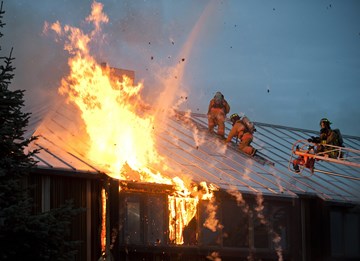
As a large fire has broken out across residential flats in West London, it is worth reiterating the importance of fire risk assessment for these types of buildings.
The Importance of Fire Risk Assessments in the Communal Areas of Flats
Communal areas — corridors, stairwells, lobbies, entrance halls, meter cupboards and shared storage spaces — are critical parts of a residential building’s fire-safety strategy. These are the routes residents rely on to escape and the areas firefighters depend on to access the building. A thorough fire risk assessment ensures these spaces remain safe, compliant, and fit for purpose.
Why Fire Risk Assessments Matter
1. They Are a Legal Requirement
Under the Regulatory Reform (Fire Safety) Order 2005, responsible persons must assess and manage fire risks in the common parts of residential buildings. Updated guidance from the Home Office confirms that this includes the building’s structure, external walls, and flat entrance doors.
The Fire Safety (England) Regulations 2022 introduced further duties, especially for buildings over 11m and high-rise blocks, including checks on fire doors, firefighting equipment, signage, and information sharing with fire and rescue services.
Failing to carry out a suitable and sufficient fire risk assessment can lead to enforcement action, prosecution, and significant financial penalties.
2. They Keep Escape Routes Safe
Communal areas must remain clear, protected, and smoke-free for as long as possible during a fire. Government guidance for small blocks of flats emphasises that responsible persons must ensure these areas are assessed and maintained to support safe evacuation.
A proper assessment identifies:
Obstructions in escape routes
Combustible items stored in corridors
Faulty or missing fire doors
Damaged compartmentation
Even small fires in communal areas can spread rapidly, endangering residents and blocking escape routes. London Fire Brigade data shows 281 fires in communal areas in 2022 alone, highlighting the ongoing risk.
3. They Reduce the Risk of Serious Incidents
Fire risk assessments help prevent the most common causes of fires in shared spaces, including:
Charging or storing e-bikes and scooters
Accumulation of rubbish or furniture
Faulty lighting or electrical installations
Arson risks in unsecured areas
The London Fire Brigade warns that even small fires in communal areas can cause major damage, mass displacement, and high financial costs for landlords and insurers.
4. They Protect Residents — Especially the Most Vulnerable
Communal areas are used by everyone, including children, elderly residents, and people with mobility issues. Updated government guidance for purpose-built flats stresses the need for responsible persons to identify risks specific to their building and occupants.
A good fire risk assessment ensures:
Escape routes are accessible
Fire doors close and latch properly
Signage is clear and visible
Lighting supports safe evacuation
5. They Support Firefighters During an Emergency
High-rise and multi-occupied buildings now require:
Floor plans
External wall information
Wayfinding signage
Checks on firefighting lifts and equipment
These measures, introduced through the Fire Safety (England) Regulations 2022, help firefighters navigate the building quickly and safely.
A fire risk assessment ensures these requirements are met and maintained.
6. They Protect Property and Reduce Costs
The economic impact of a communal-area fire can be severe. The average cost of a domestic fire in London was estimated at over £48,000 — and this figure is likely conservative when factoring in inflation, displacement, and repairs.
A proactive assessment reduces the likelihood of:
Major structural damage
Insurance claims and premium increases
Rehousing costs
Legal action from residents
7. They Demonstrate Professionalism and Compliance
For landlords, managing agents, and housing providers, a well-documented fire risk assessment shows:
Compliance with UK fire-safety law
Commitment to resident safety
Proper management of communal areas
A proactive approach to risk reduction
This is essential for reputation, accountability, and long-term building safety.
Conclusion
A fire risk assessment in the communal areas of flats is not just a legal obligation — it is a vital safeguard that protects lives, property, and the integrity of the building. With updated legislation and increasing risks such as e-bike fires, regular assessments are more important than ever.
Please email Whale Fire @ info@whalefire.co.uk or use our enquiry form here Contact Us - Whale Fire