Suffolk Wildfire: What a 371-Acre Blaze Tells Us About Wildfire Risk in the UK
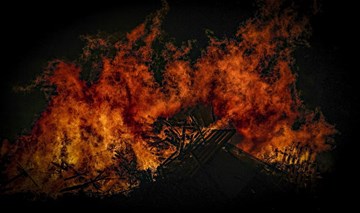
A major wildfire that tore through heathland at Dunwich, on the Suffolk coast, has now burned for several days, destroying an area equivalent to around 210 football pitches. The blaze, which started at RSPB Minsmere on a Wednesday evening and spread onto the National Trust's Dunwich Heath, has been described by the charity as leaving the landscape "unrecognisable" — and its effects will be felt for years to come.
While the fire is now stable, thanks to extensive firebreaks dug by Suffolk Fire and Rescue Service, it's a striking reminder that wildfire is no longer a risk confined to the height of a heatwave or to remote countryside. It's a live operational challenge that fire and rescue services, landowners, and businesses across the UK increasingly need to plan for.
What Happened
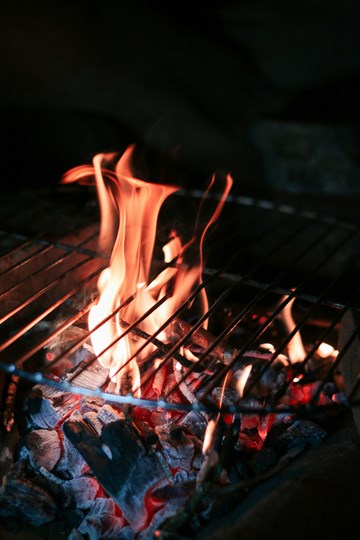
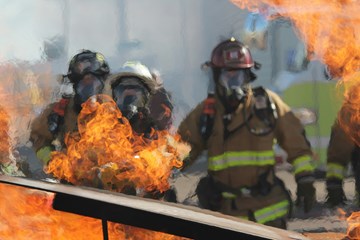
The fire began at RSPB Minsmere and spread rapidly across dry heathland toward Dunwich Heath, ultimately affecting around 150 hectares. Suffolk Fire and Rescue Service treated it as a major incident, deploying up to ten fire appliances at the peak of daytime operations and creating firebreaks up to 12 metres wide around the entire site to stop flames and embers spreading further. Nearby Leiston Abbey was evacuated as a precaution, with a local boarding school stepping in to house displaced groups.
The site sits only a few miles from the Sizewell B nuclear power plant, underlining how wildfire risk can intersect with critical national infrastructure even when the fire itself poses no direct threat to a facility.
Why This Matters Beyond Suffolk
For anyone responsible for fire risk assessment, this incident is a useful case study in several respects:
- Wildfire is now a mainstream UK risk, not an exceptional one. Prolonged dry spells and changing weather patterns are making heathland, moorland, and forested sites more vulnerable across the country, not just in traditionally fire-prone regions.
- Major incidents strain fire and rescue capacity. When a service commits significant resources to a large-scale wildfire over several days, its capacity to respond quickly elsewhere is reduced. This is a factor worth building into risk assessments for premises in rural or semi-rural areas, particularly those some distance from a fire station.
- Sites near sensitive infrastructure carry extra weight. The proximity of this fire to a nuclear power station is a reminder that fire risk assessments for infrastructure, industrial, and commercial sites near natural land should factor in external wildfire exposure, not just risks originating within the building or site boundary.
- Firebreaks and land management are genuine mitigation tools. The creation of wide firebreaks was credited with stabilising this fire. Landowners and site managers with adjoining heath, grass, or woodland should consider whether vegetation management, cleared perimeters, or coordination with the local fire service form part of their existing fire safety planning.
- Recovery timelines are long. The charities involved have been clear that ecological and landscape recovery will take years. The same is often true of commercial or heritage sites damaged by fire — a point worth factoring into business continuity planning, not just prevention.
The Fire Risk Assessment Angle
Most fire risk assessments understandably focus on risks that originate inside a building — electrical faults, storage of combustibles, escape routes, and so on. Incidents like this highlight the value of also considering external and environmental fire risk, especially for:
- Rural or semi-rural commercial premises
- Sites adjoining heathland, grassland, moorland, or woodland
- Infrastructure or industrial sites in areas with limited fire service coverage
- Heritage or environmentally sensitive locations where recovery from fire damage is slow and costly
A thorough fire risk assessment should account not only for how a fire might start inside a premises, but how a fire starting nearby — including a wildfire — could affect access, evacuation, and the availability of emergency response.
If your business or site sits near open land, now is a sensible time to review whether external fire risk has been properly considered as part of your fire safety planning. Contact Us - Whale Fire
"Tinderbox" Britain: Why This Summer's Heatwave Is Turning Gardens and Outbuildings Into Fire Risks
"Tinderbox" Britain: Why This Summer's Heatwave Is Turning Gardens and Outbuildings Into Fire Risks
Britain is in the grip of one of its driest, hottest summers in decades. With weeks stretching by in some areas without meaningful rainfall, and temperatures repeatedly climbing past 30°C, fire and rescue services across the country are issuing an unusually blunt warning: your back garden could be the next fire scene.
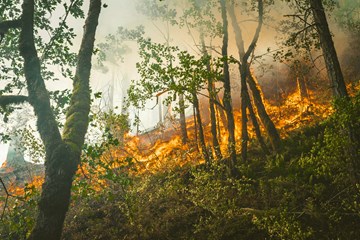
In recent days, fire crews in London have battled major blazes that tore through residential gardens, destroying sheds, fences, and outbuildings, and in at least one case gutting a house, after fire jumped from garden to garden in strong winds. Incident commanders have described the speed of the spread as extraordinary — flames moving through tinder-dry vegetation, timber sheds and garden waste far faster than crews could contain them, with gas cylinders in some gardens needing to be cooled for hours to prevent explosions.
It's a stark reminder that fire risk isn't confined to commercial premises, high-rise cladding, or industrial sites. This summer, it's arriving over the garden fence.
Why Gardens Are Burning So Easily
A combination of factors has turned ordinary back gardens into genuine fire hazards:
- Prolonged dry weather has left lawns, hedges, and shrubs dried out and highly combustible, while parched soil means plants offer little natural resistance to fire.
- Hosepipe bans in several regions mean gardens that would normally be kept damp are instead bone dry, removing one of the simplest natural firebreaks homeowners have.
- Strong winds have repeatedly been cited by fire services as the reason blazes have spread so rapidly from garden to garden, jumping fences and hedgerows within minutes.
- Outbuildings and sheds, often built from untreated timber and packed with paint, fuel, gas canisters, or gardening chemicals, act as ready fuel sources once fire reaches them.
- Compost heaps and garden waste piles, especially if left dry, can smoulder and ignite far more easily than most people realise.
None of these factors are exotic. They exist in ordinary gardens up and down the country — which is exactly why fire chiefs are urging households to take the threat seriously now, rather than after a fire has already taken hold.
What Fire Services Are Recommending
Following recent incidents, London Fire Brigade and other services have urged residents to create "firebreaks" around their homes and gardens. In practice, this means:
- Keeping grass cut short (ideally below around 7cm), since shorter, greener growth burns less readily than long, dry grass.
- Clearing dead leaves, especially from gutters and against fences or sheds, where they can act as kindling.
- Positioning sheds, wood piles, and garden furniture away from the house itself, so that if they do catch fire, they're not an immediate bridge to your property.
- Cutting back trees and shrubs that grow close to the house.
- Keeping compost heaps damp and away from buildings, and maintaining a sensible balance of "green" and "brown" material to reduce the risk of spontaneous combustion.
- Where hosepipe bans are in force, using water butts or greywater to keep vulnerable areas damp rather than letting them dry out completely.
Beyond the Garden: What This Means for Property Owners and Businesses
For homeowners, this is sound seasonal advice. But for landlords, property managers, and businesses with outdoor areas — gardens, yards, storage compounds, or outbuildings attached to commercial premises — this summer's conditions raise a more serious question: has your fire risk assessment actually considered external fire spread?
Many fire risk assessments focus heavily on the building itself: escape routes, alarm systems, compartmentation, fire doors. External fire risk — vegetation, waste storage, fuel and gas storage, the proximity of combustible outbuildings to occupied buildings — is sometimes treated as an afterthought, if it's considered at all. This summer is showing exactly why that gap matters. Fire doesn't need to start inside a building to threaten the people in it; it just needs a dry, combustible path to travel along.
If you're responsible for a property — whether that's a family home with a shed full of tools and paint tins, a rental property with an overgrown garden, or commercial premises with an outdoor storage yard — now is the time to walk the perimeter and ask some honest questions:
- Is there dry vegetation, waste, or combustible material close to the building?
- Are outbuildings positioned in a way that a fire in one could realistically spread to another, or to the main property?
- Are gas cylinders, fuel, or chemicals stored safely, away from potential ignition sources, and clear of anything that could burn readily around them?
- Would your escape routes and access for fire crews still work if the garden or yard itself were on fire?
Don't Wait for the Next Blaze
Extreme weather isn't going away, and this pattern — long dry spells followed by fast-moving, wind-driven fires — is one UK households and businesses are likely to see more of in years to come. A proper fire risk assessment doesn't just tick a compliance box; it identifies exactly these kinds of overlooked, seasonal risks before they turn into a call to the fire brigade.
If you're responsible for a property and you're not confident that external fire risks — gardens, outbuildings, storage areas — have been properly assessed, now is the time to get it checked, not after the next heatwave headline.
Whale Fire specialises in thorough, practical fire risk assessments that look at the whole picture — not just the building, but everything around it. Get in touch to make sure your property is protected before the next tinderbox summer Contact Us - Whale Fire
Twelve Crews, One Joinery: What the Hollesley Blaze Teaches Us About Fire Risk
A large fire at James Allen Joinery on Lodge Road in Hollesley, Suffolk, has once again shown how quickly a workshop fire can escalate — and how much it can demand of the fire service, local businesses, and the surrounding community. As a Watch Commander with over 26 years in the Fire Service, incidents like this are exactly the kind of case study worth breaking down for anyone responsible for fire safety in a commercial premises.
What Happened
Suffolk Fire and Rescue Service was called to the scene shortly before 9am on Thursday 9 July, after multiple reports of a blaze at the joinery business. A dozen fire crews attended from stations across the county — Ipswich East, Ipswich Princes Street, Saxmundham, Felixstowe, Framlingham, Beccles, Needham Market, Haverhill, Newmarket, Stowmarket, Bury St Edmunds and Long Melford — alongside specialist appliances including an aerial ladder, rescue tender, water carrier and command support vehicle.
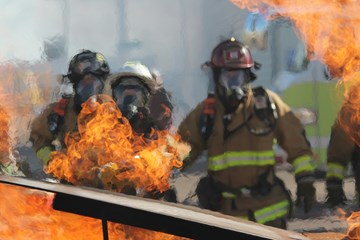
By the time crews arrived, the building — roughly 30 metres by 15 metres — was already around 90% involved in fire. The premises contained gas cylinders and had an asbestos roof, both significant complicating factors for any incident commander. Firefighters used three hose jets, two larger hose lines, and a hydrant, supported by a water relay system, and deployed an aerial ladder as a water tower to reach the fire in the middle of the workshop. The fire was reported under control by around 11:10am, though crews remained on scene for several hours afterwards, with relief units arriving to support the original teams. No casualties were reported, and The Salvation Army was requested to provide welfare support for firefighting crews — a detail that says a lot about the scale and duration of the operation.
Notably, the incident also drew in the local farming community: nearby farmer Thomas Buckle supplied fire crews with water via an irrigation pump, with an estimated 10,000 litres used to help control the flames, after station manager Alex Smith highlighted that water resources in the area were limited.
Why This Incident Matters for Fire Risk Assessments
Every large-scale commercial fire offers lessons for other businesses, and this one raises several points worth flagging for any premises with a similar risk profile.
1. Joinery and woodworking premises are high fuel-load environments
Timber, sawdust, finishes, and stored materials all add up to a significant fuel load. Once ignition takes hold in a workshop like this, fire can spread rapidly through stock, machinery, and structural timber before crews arrive — which is consistent with how quickly this building reportedly became fully involved.
2. Stored cylinders change the entire risk calculation
The presence of gas cylinders inside the building is a critical detail. Compressed or flammable gas cylinders can fail catastrophically when exposed to fire, and their presence directly shapes how incident commanders approach tactics, exclusion zones, and crew safety. If your business stores cylinders on site — for welding, heating, or process use — your fire risk assessment needs to address safe storage location, separation distances, signage, and what the fire service needs to know if called to your premises.
3. Asbestos roofing adds a layer of complexity
An asbestos roof significantly affects both firefighting tactics and the post-incident environment. Fire damage to asbestos materials can release fibres, creating an additional hazard for firefighters, investigators, and anyone returning to the site afterwards. If your building has legacy asbestos materials, your fire risk assessment and your asbestos management plan need to talk to each other — not sit in separate drawers.
4. Water supply is not guaranteed in rural locations
The reliance on farm irrigation equipment to supplement hydrant supply is a striking reminder that firefighting water availability varies significantly by location. Rural and semi-rural commercial premises should never assume mains water pressure and hydrant coverage will be sufficient — this is something a competent fire risk assessment should specifically consider, including whether additional water supply arrangements (static tanks, agreements with neighbouring landowners, etc.) are appropriate.
5. Dry weather conditions increase external fire spread risk
Reports from the scene noted that dry conditions contributed to the fire spreading to nearby vegetation. As UK summers trend hotter and drier, businesses with adjacent hedgerows, grassland, or vegetation need to factor wildfire-style spread into their site risk picture, not just internal fire spread.
The Takeaway for Business Owners
Incidents like Hollesley don't happen because someone was careless — they happen because risk factors stack up: combustible materials, stored gases, legacy building materials, and site-specific challenges like water supply. A proper fire risk assessment doesn't just tick a compliance box; it identifies exactly these kinds of compounding risks before they combine into a 12-crew, day-long incident.
If your business handles timber, stores cylinders, occupies an older building with legacy materials like asbestos, or sits somewhere firefighting water supply might be a challenge, now is a good time to review your fire risk assessment — not after an incident like this one.
Whale Fire Ltd helps businesses across the UK identify and manage exactly these risks. Get in touch if you'd like a professional fire risk assessment for your premises. Extinguish the Risk. Contact Us - Whale Fire
Sources: East Anglian Daily Times, "Farmers praised for support in tackling Hollesley fire" and "Hollesley farmer assists firefighters during day long blaze," 10 July 2026; BBC News, "Twelve fire crews tackle large joinery blaze in Hollesley," 10 July 2026.
Lithium-Ion Batteries: The Fire Risk Landlords Can No Longer Afford to Ignore
London Fire Brigade figures for 2025 make sobering reading. Firefighters attended 206 e-bike and e-scooter fires across the capital last year — an average of one every other day. Two people died. Since 2023, that fatality figure now stands at five. In every one of those five deaths, the person killed did not own the e-bike involved.
That last point matters enormously for anyone managing residential property. These are not accidents that only affect the rider. They're happening in shared hallways, communal stairwells and residential blocks, and the people paying the price are often neighbours, family members and other residents who had no involvement with the device at all.
Where the risk is concentrated
Lewisham and Southwark recorded the highest number of incidents in 2025, with 16 each, followed by Tower Hamlets, Lambeth and Westminster. But this isn't a problem confined to a handful of boroughs — it's a London-wide trend, and the underlying causes apply just as much to a converted HMO in Surrey as they do to a tower block in east London. London Fire Brigade data shows these fires occur disproportionately in high-rise residential premises and social housing, which should be of particular concern to anyone managing blocks of flats, HMOs or supported housing.
Around 83% of the fires involved e-bikes rather than e-scooters. Investigations consistently point to the same root causes: lithium-ion battery failure, unregulated conversion kits, and incompatible or faulty chargers. Batteries bought online — whether new or second-hand — that don't meet UK safety standards are especially prone to failure. A significant proportion of e-bike fires involve conversion kits, which typically have no product safety standard applied to them at all, and often leave the end user guessing which battery and charger combination is safe to use.
Why this is now a landlord's problem, not just a rider's
Under the Regulatory Reform (Fire Safety) Order 2005, the Responsible Person for a building — typically the landlord, freeholder or managing agent — has a legal duty to identify fire hazards affecting the common parts and the building as a whole, and to take reasonable steps to reduce the risk to occupants. Lithium-ion battery fires from e-bikes and e-scooters are now firmly within scope of that duty.
In practical terms, that means your fire risk assessment should explicitly consider:
- Whether e-bikes or e-scooters are being stored or charged in communal areas, hallways, or escape routes
- Whether current storage arrangements could obstruct a means of escape in the event of fire
- What information tenants have been given about safe charging and storage
- Whether the building's fire strategy and evacuation procedures account for a fast-developing battery fire, which can produce intense heat and toxic smoke within seconds of thermal runaway beginning
A number of the fatal and serious incidents recorded by London Fire Brigade have involved bikes or batteries stored in communal hallways, precisely because that's often the only practical charging point available to residents in flats without private storage. If your building has this issue, it needs addressing directly rather than left as an informal arrangement between tenants.
Practical steps for landlords and managing agents
Recognising the risk is the easy part. Managing it effectively means:
- Reviewing and updating fire risk assessments specifically to address lithium-ion battery storage and charging, rather than treating it as a generic electrical risk
- Making clear in tenancy agreements or building rules where e-bikes and e-scooters may and may not be stored or charged
- Providing, where practical, a dedicated and appropriately ventilated charging area away from escape routes
- Communicating clearly with residents about the dangers of counterfeit batteries, incompatible chargers and unregulated conversion kits
- Ensuring escape routes and communal areas are never used for storage or charging under any circumstances
The Government has been under sustained pressure from London Fire Brigade to introduce stronger product safety regulation for e-bikes, e-scooters and conversion kits, and further legislation is expected. But regulation of the products themselves won't reduce a landlord's own legal duties in the meantime, and enforcement action following a serious fire will look closely at what the Responsible Person knew and what they did about it.
Having spent 26 years in the fire service, I've attended incidents where a fire that started with a single battery in a hallway spread with a speed that caught everyone by surprise. Lithium-ion fires behave differently to conventional fires — they can escalate from nothing to fully involved in under a minute, and they're notoriously difficult to extinguish once thermal runaway sets in. Prevention, not response, is where the real protection lies.
If it's been a while since your fire risk assessment specifically addressed e-bike and e-scooter charging, now is a sensible time to have it reviewed. Whale Fire carries out fire risk assessments across residential and commercial premises and can help you identify where this emerging risk applies to your building. For all London Fire Risk Assessments please contact us at Contact Us - Whale Fire
Fire Safety in London: What Every Business and Homeowner Needs to Know
London is one of the busiest fire and rescue environments in the country. The London Fire Brigade (LFB) attended 137,412 incidents in 2025 alone — an average of 376 every single day. Of these, 19,542 were fire incidents, concentrated most heavily in Inner London boroughs such as Westminster, Newham and Tower Hamlets, though outer boroughs including Bromley, Brent and Havering also have notable hotspots.
For anyone responsible for a building in the capital — whether that's a shop, an office, a block of flats or a family home — understanding the current risk landscape isn't just useful background. It shapes what a proper fire risk assessment needs to cover.
The Changing Face of Fire Risk
Lithium-ion batteries are now the fastest-growing fire risk in London. LFB recorded 521 fire incidents involving lithium-ion batteries in 2025, a 28% increase on the previous year. These fires caused 109 injuries and three deaths. E-bikes and e-scooters, along with the batteries that power them, are a particular concern — LFB has even partnered with Uber Eats to raise battery safety awareness among delivery couriers. For premises where staff or residents charge these devices, this is now a risk that needs explicit consideration, not an afterthought.
Cooking and electrical faults remain the two biggest causes of fire, especially during the early evening. LFB data shows that between 5pm and 8pm, fires occur at more than three times the rate seen during the quietest overnight hours, with cooking (4,430 fires) and electrical faults (2,100 fires) the leading causes during that peak window.
Hoarding-related fires are rising too. Crews attended 1,028 hoarding-related fires in 2025 — the highest figure since 2022, and an 8% increase on 2024. Cluttered properties fuel fires, block escape routes and make firefighting far more difficult. This is a factor increasingly relevant to landlords, housing providers and anyone managing vulnerable tenants.
Vulnerable occupants face disproportionate risk. LFB figures show that over a third of people who die in dwelling fires in London were receiving some form of care, formal or informal. This has clear implications for care homes, supported housing, and any premises where residents may have reduced mobility or cognitive impairment.
London Fire Brigade's Prevention Work
Fire safety in London isn't left to chance. In 2025, LFB carried out 11,730 fire safety inspections and audits under the Regulatory Reform (Fire Safety) Order 2005 — the piece of legislation that places legal responsibility for fire safety on the "responsible person" for non-domestic premises. Inspection activity is weighted towards central, east and south London boroughs, reflecting the density of commercial and residential occupancy in those areas.
Response performance also varies across the capital. In 2025, LFB's average first-pump attendance time was around five minutes 30 seconds, comfortably within its six-minute target — but this masks real variation between boroughs. Kensington and Chelsea saw average response times of 4 minutes 36 seconds, compared with 6 minutes 24 seconds in Hillingdon. Six boroughs, including Hillingdon, Bromley, Havering, Enfield, Redbridge and Richmond upon Thames, consistently sit above the six-minute average. If your premises falls in one of the slower-response areas, that's a factor worth building into your fire safety planning — particularly around compartmentation, alarm systems and evacuation procedures that reduce reliance on a fast brigade response.
What This Means for the "Responsible Person"
Under the Regulatory Reform (Fire Safety) Order 2005, anyone who has control of non-domestic premises in London — employers, landlords, building owners, occupiers — is legally required to carry out and regularly review a fire risk assessment. This isn't a box-ticking exercise. It needs to reflect the real risks present in your specific building: how it's used, who occupies it, what's stored there, and how people would escape in an emergency.
Given the data above, a fire risk assessment for a London premises today should specifically address:
- Charging and storage arrangements for lithium-ion batteries and e-mobility devices
- Electrical safety and cooking risk management, particularly in premises with high footfall during peak evening hours
- Escape route management in premises where clutter or storage could obstruct exits
- Provisions for vulnerable occupants, including those with mobility or cognitive impairment
- Realistic evacuation timings that account for local response times rather than assuming a fast brigade arrival
Getting a Proper Assessment
A fire risk assessment carried out by someone with genuine operational fire service experience looks different from a generic checklist exercise. It considers how a fire would actually behave in your building, how people would actually respond, and where the real gaps are — not just what the regulations technically require.
If you're responsible for a premises in London and it's been a while since your last fire risk assessment — or you've never had one carried out properly — it's worth getting it reviewed. Get in touch with Whale Fire to discuss your building's specific risks and what a thorough, compliant assessment would involve. Contact Us - Whale Fire